I'm reading Zhuangzi with my class.  Always a pleasure, Zhuangzi.  Always a challenge, a joy.

The second chapter is one of the most striking expositions of a radical epistemological skepticism that I know (and I admit my knowledge here is limited).  Here's this from the Stanford Encyclopedia of Philosophy:

He is particularly critical of assumptions such as the one
to one correspondence between words and the objects to which they refer
that is an offshoot of the Confucian doctrine of the rectification of
names. He demonstrates that naming is purely arbitrary and conventional
and cannot be used to give any objective certainty about the world.
Furthermore no matter how sophisticated the logic involved, no argument
can establish objective truths because all knowing remains confined to
the standpoint of the knower…

Language and logic are inadequate to the task of understanding.  Wow.  Without language and logic how then is any understanding possible?  Zhuangzi answers this, I believe. with the Cook Ding story: through acute awareness of our immediate surroundings and constant practice of certain appropriate actions in context we can come to "understand," in a sense, through direct experience, a narrow slice of time-space.  That's about it.  We cannot express that understanding in words, we cannot analyze it logically, we can only apprehend it and enact it.  That's what Zhuangzi is getting at in this passage from chapter 2 (Hinton translation):

A sage inquires into realms beyond time and space, but never talks about them.  A sage talks about realms within time and space, but never explains.  In the Spring and Autumn Annals, where it tells about the ancient emperors, it says the sage explains but never divides.  Hence, in difference there's no difference, and in division there's no division.  You may ask how this can be.  The sage embraces it all.  Everyone else divides things, and uses one to reveal the other.  Therefore, I say: "Those who divide things cannot see." (27)

For some questions, language is utterly useless; thus the sage (one who has attained Zhuangist understanding) "never talks about them."  For other questions, language might be possible, though always imperfect, but analysis is always more of a distortion than a help; thus the sage "never divides."  Indeed, emphasis is added to this latter point: "Those who divide things cannot see."  Understanding, then, would seem to rely upon seeing things whole, not breaking them down into component parts because in doing so we inevitably create categories and distinctions that are inventions of our own mind, not true to the complexity and dynamism of the ever-unfolding reality of Way.  Burton Watson's translation of the last couple of lines cited above may help illuminate this point:

So [I say,] those who divide fail to divide; those who discriminate fail to discriminate.  What does this mean, you ask?  The sage embraces things.  Ordinary men discriminate among them and parade their discriminations before others.  So I say, those who discriminate fail to see.

Division and discrimination – analysis – cannot help but fail.  When we rely on analysis, we always miss something.  A.C. Graham's translation of these same lines gets at this sense of always missing something:

To 'divide', then, is to leave something undivided: to 'discriminate between alternatives' is to leave something which is neither alternative.  'What?' you ask.  The sage keeps it in his breast, common men argue over alternatives to show it to each other.  Hence I say: 'To "discriminate between alternatives" is to fail to see something'.

Analysis, argumentation, discrimination always leaves something out, always produces partial and faulty and distorted "understanding."

So, Zhuangzi is asking us to give up our reliance on logic and analysis and language in order to move toward a fuller understanding, unfettered by humanly-created categories and discriminations that obstruct our experience of Way.

Can we do it?
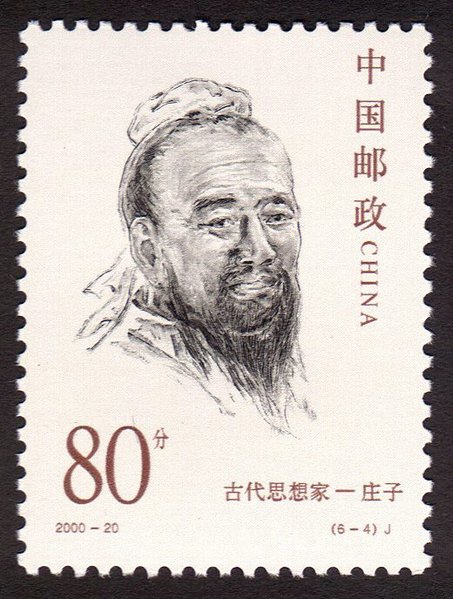
453px-Zhuang_Zi 

UPDATE: Thanks to the Chinese Text Project, here is the Chinese for the key lines variously translated above:

ζ•…εˆ†δΉŸθ€…οΌŒζœ‰δΈεˆ†δΉŸοΌ›θΎ©δΉŸθ€…οΌŒζœ‰δΈθΎ©δΉŸγ€‚ζ›°οΌšδ½•δΉŸοΌŸεœ£δΊΊζ€€δΉ‹οΌŒδΌ—δΊΊθΎ©δΉ‹δ»₯η›Έη€ΊδΉŸγ€‚ζ•…ζ›°οΌšθΎ©δΉŸθ€…οΌŒζœ‰δΈθ§δΉŸγ€‚

Sam Crane Avatar

Published by

Categories: ,

11 responses to “What is Zhuangzi asking of us?”

  1. John Ramsey Avatar
    John Ramsey

    We shouldn’t accept the question you pose at the end. It, too much, relies on discriminating and making distinctions: logic, analysis, and distinctions are bad; full understanding is good. Zhuangzi is as good as (even better than) Hui Shi at logic and analysis, but he doesn’t stop there–he goes on to “embrace” things. (And keeps the discriminating activity to himself). Woodcarver Qing makes distinctions–he selects the tree best suited for the bell stand he’s currently working on. Cook Ding is cutting up an animal–into pieces! (sirloin, rib eye, fillet mignon). His cuts, however, are not rigid but flow with the way the animal is, not according to the butcher’s diagram. In both stories, we see how Cook Ding and Woodcarver Qing progress beyond making distinctions relevant to their activities.
    Perhaps, logic and language is not not inadequate for understanding. True, articulating one’s understanding is different than one’s understanding, but it doesn’t follow that one’s understanding can’t be articulated. Suppose that someone articulates (analyzes and clarifies) some chunk of understanding in a particular context, that can certainly be helpful. However, it is a distortion if we hold too tightly to that analysis–i.e. we parade our articulation before others. Perhaps we shouldn’t extend the analysis beyond that understanding in that particular context. Discriminating and making distinctions, logical analysis, etc., have their place and they may even enhance our understanding; we shouldn’t stop there and celebrate, though.

    Like

  2. casey kochmer Avatar

    When releasing into clarity, it is as the “sage” and live to what Zhuangzi paints
    when playing as “Casey”, “Sam” , “John” or even as “Zhuangzi” then no, since we are busily experiencing distinction
    Taoist practice teaches us how to flow and swim between these two states between being “Named” and of “being truly human”.

    Like

  3. zuraffo Avatar
    zuraffo

    You are missing a point; in writing this:
    “Zhuangzi is asking us to give up our reliance on logic and analysis and language in order to move toward a fuller understanding, unfettered by humanly-created categories and discriminations that obstruct our experience of Way.”
    You miss the point that the Way is whole and integral. “Humanly-created categories and discriminations” are part of the Way. The sage embraces, the common people divides, such is the Way, and neither one is “closer” to the Way than the other.
    The point of understanding is not what you try to understand or how you attempt to understand it, but the understanding itself. Whether through words or otherwise. We may call it wisdom.
    The point of believing is not what you believe, but the belief itself. We may call it faith.
    Do not make the way into something far off that you need to attain, pursue or understand. The way simply is, and you merely have to surrender to it.

    Like

  4. dg Avatar
    dg

    casey kochmer, I agree with you…sort of
    I have come to realize that belief or faith is at the heart of a Taoist practice.
    The way simply is so there is no need to surrender. Whether you believe or not, whether you resist or not, you are no closer to the way. The belief is an acknowledgment of the way. So is understanding. In fact, I’d say they are the same. The way simply is, period.
    I also agree with John Ramsey that language is not useless, especially when sharing understanding. I think the view this blogger reached is understandable given that ” logic and analysis and language” tend to be an end to themselves i.e. logic begets more logic, that one could read that logic is thereby all useless. But, as you said, it is taking this understanding arrived at through language as the truth that is unwise, not the context of this understanding. The world is not black and white, human and natural. It’s gray like Seattle skies.

    Like

  5. dg Avatar
    dg

    oh sorry, wrong person, zuraffo, not casey for the first part

    Like

  6. Keith Watson Avatar

    Zhuangzi asks much.
    As Uncle Tree says,
    “It’s only make-believe, if
    one can be made to believe it.”
    Preference is just a word.
    I should be worried.
    Hello!
    http://me2watson.wordpress.com/

    Like

  7. Allan Lian Avatar

    Mind games while good for the intellect is not for Tao. Our spirit (shen) within which can help return us to Tao is not just is, neither can it be explained.
    Like the ancient masters (shi) of Tao, if we want to see the way of heaven, it is only through constant cultivation and practice. (Something in line with Cook Ding’s example)
    Cultivators of Tao who get too attached to mind games could lose or drop out of the way without knowing it. Just is, a state of mind, is not Wu Wei. But how would I know?

    Like

  8. Keith Watson Avatar

    A game of hide and seek.
    Or lose and find.
    Or never find and quit looking.
    Or knock, but don’t try to enter.
    Or stay still and no place to go.
    This is all there is, says bird on roof.
    The bird is the cause of further questioning.

    Like

  9. Sam Avatar

    Thanks all for the comments.
    More thoughts:
    Daoism and faith…is faith the same as acceptance? Because my sense of Zhuangzi and the Daodejing is that they ask us to simply accept Way, open ourselves to it, resist the temptation to impose categories and theories and, yes, language upon it. But is that the same as “faith”? I’m not sure…
    I also wonder if part of what is going on in these texts is a bit of rhetorical excess. Zhuangzi especially seems to suggest a radical rejection of human knowledge. But, of course, he (or the authors of the book that bears his name) participates in the creation and reproduction of human knowledge through the creation and circulation of the text. Perhaps, then, the authors do not want to be taken literally. Perhaps some sorts of human knowledge are helpful in apprehending Way. But they just want to shake us up, inject a continual theme of skepticism and humility into our “learned” conversations…

    Like

  10. casey kochmer Avatar

    acceptance is a tiny step beyond faith. They are almost the same but not quite
    for many I teach “acceptance is faith” just becuase in western culture people are taught faith and from faith you can discover acceptance.
    fine line and one which I use to help people find the way πŸ™‚
    the difference is release.. many people have faith but haven’t fully released into their “faith”… acceptance also embodies release
    but again many people have faith with release so they have acceptance…
    word play at that point…

    Like

  11. casey kochmer Avatar

    if part of what is going on in these texts is a bit of rhetorical excess.
    Of course, it’s poetry, even when in text format, still poetic in style of expression.
    but the limits of the excess changes from person to person.. so best left alone for each person to slip up on.. since it helps fuel the process of release
    plus also consider the times, you know some of these writings are poking at other styles of thought working for attention.

    Like

Leave a reply to casey kochmer Cancel reply