The Daodejing takes a dim view of weapons. Passage 31 begins (Legge translation):
Now arms, however beautiful, are instruments of evil omen, hateful, it
may be said, to all creatures. Therefore they who have the Dao do not
like to employ them.
夫佳兵者,不祥之器,物或惡之,故有道者不處。
This is not simply an anti-war message, though the Daodejing can be seen as generally anti-war. The aversion to arms runs deeper. Weapons distort our humanity. They take us away from allowing Dao to unfold as it will; they are instruments of coercive intervention that often do more harm than good. In a well-ordered society, as in passage 80, they are unnecessary (Eno translation):
Though there be armor and weaponry, they shall not be deployed.
雖有甲兵,無所陳之.
Weapons bring out the worst in people. They make us think that we can easily dominate others, take what we want without fear of reprisal. They instill a false sense of power: yes, a gun would allow me to kill a person right here and now, and the fear of that sort of violent death may well cause that person to do what I want right here and now. But this is a false power because, over time, that coercive force will reach its limit, or it may even inspire counteractions that are more powerful. A gun may facilitate a victory today, but it cannot bring victories forever.
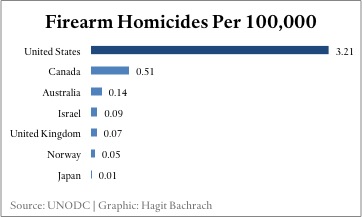
The wretched "debate" on gun control in the US misses most of this. Gun zealots hold an impoverished view of society, one that presumes the complete absence of civility. All they can think of is violent attack against their persons that they believe they can somehow prevent with a firearm. They resist data that suggest gun ownvership brings an increased likelihood of accidental harm and suicide. Due to the power of the gun lobby, advocates of stricter regulation are reduced to the narrowest proposals for limiting the availability of fire arms. Thus, American society is flooded with guns, and grows coarser because of it.
Guns also undermine democracy. Think about it: democracy requires freedom of expression. Open, rational debate, with the possibility of peacefully persuading others of your position is the ideal. Firearms distort that process. The coercive potential they represent can silence people, weakening the give and take that democracy require. Interestingly, although not a treatise on democracy, the Daodejing seems to understand this in passage 36 (Hinton):
Fish should be kept in their watery depths: a nation's honed instruments of power should be kept well-hidden from the people.
魚不可脫於淵,國之利器不可以示人。
This statement will not doubt enrage gun owners who resist reasonable regulation. They will see in it a conspiracy on the part of state power-holders to dominate the population. But that ignores the prior point that state power-holders themselves should not rely upon weapons. The point of passage 36 is that "soft and weak overcome hard and strong" (柔弱勝剛強). Fishes find natural comfort in the depths; and people will find their best natural expressions when weapons are not ostentatiously displayed.
Americans can learn something from the Daodejing here: weapons weaken our humanity.


 The Useless Tree
Leave a reply to James Cancel reply