Couldn't resist the title, which came to mind after I read this recent BBC commentary by Martin Jacques: "Is China more legitimate than the West?" (his book is entiteld When China Rules the World) There are many problems with the piece, perhaps the least of which is its main thesis, but let's start there.
Jacques argues:
Now let me shock you: the Chinese state enjoys greater legitimacy than any
Western state. How come?
In China's case the source of the state's legitimacy lies entirely outside
the history or experience of Western societies.
This was less shocking than simply inane. What does it mean to say that the PRC state is more legitimate than any in the "West"? He gives us no definition or basis for understanding what he means by "legitimacy." Serious considerations of the topic, remind us that legitimacy is not simply popularity. And it's obvious that Jacques has not really done any sort of systematic analysis to back up his claim. He's just throwing rather empty rhetoric out there to demonstrate his admiration for the CCP.
But he gets into some historical trouble with that second assertion, that China is somehow "outside the history or experience of Western societies." This belies a certain inattentiveness to both Chinese politics, from at least 1911 onwards, as well as international relations more broadly. As Amitav Acharya (pdf!), among others, argued years ago: "…China uses Westphalian language to stake its claims to territory and sovereignty." Imperial China did not operate with the same understanding of sovereignty as the Western powers in the 19th century. This created big, big problems that weakened the Celestial Empire's capacity to resist imperialist encroachments. Throughout the 20th century and into the 21st, Chinese states, both the Republic of China and the People's Republic of China have not repeated that mistake. They have embraced the Westphalian notion of sovereignty as exclusive and extensive political dominion within a given territory, and they have used that concept to define and defend Chinese interests in terms very much within the experience of Western societies.
And, yes, we all know that Westphalian sovereignty is regularly violated by the Great Powers that say they respect it. We all learned this in our international relations theory classes, of which, perhaps Jacques needs a bit more. The point is that the concept of sovereignty, as adapted from the Westphalian idea, matters because it defines a good part of the give and take, and hypocrisy, of contemporary international relations, China included.
But there are bigger problems with Jacques's piece. Take this assertion:
…China is not primarily a nation-state but a civilisation-state. For the Chinese,
what matters is civilisation. For Westerners it is nation. The most important
political value in China is the integrity and unity of the civilisation-state.
He's taking an idea – China as "civilization state" – first forwarded by Lucien Pye twenty years ago and misapplying it by putting it in the service of a facile historical exceptionalism. Yes, Chinese history is different than American or British or French history. Yes, the idea and practice of "national identity" and "nationalism" arose in the West (theorists differ on where it started and when, but the modern concept is generally understood to have developed outside of China). But it is rather clear at this point that "nation" is very important to "the Chinese" (is there a singular, monolithic "Chinese" experience? I don't think so…). Similar to the embrace of Western notions of sovereignty, many Chinese people, especially poltiical leaders and intellectuals, have worked hard, for over a hundred years, to define and reproduce various understandings of modern national identity in China.
It is curious that Jacques discounts the importance of nationalism in China. I don't know him, but his biography suggests that he was trained as an economist, with a focus on Marxist theory. And that might explain his disregard for nationalism. Remember: Benedict Anderson, in his classic study, works hard to convince those on the left that Marx was wrong in this regard, that nationalism is, in fact, a powerful political force, not just in Europe but all around the world.
Jacques really misses the boat here. Of course, other aspects of his argument have some merit. China has gained a great deal of economic and political and military power in the past three decades. And the PRC is pressing against certain international rules and practices that its leaders feel do not serve its interests. But there is nothing particularly remarkable here. Other "Western" powers have behaved in similar ways. Moreover, it is not at all clear that China will "rule the world" any time soon. It will be more powerful. It will get its way in some areas where in the past it did not. But global power is diffuse. Capital in dynamically mobile. Advantages come and go, and that pattern seems to be accelerating as globalization makes everything – production, information, understanding – move faster and faster and faster.
Assertions of cultural exceptionalism thus seem untenable in a world that fragments and shifts and chages so quickly. And nostalgia for a world that never existed is simply misplaced, as with this line from Jacques:
The Chinese idea of the state could hardly be more different [than that of the "West]
They do not view it from a narrowly utilitarian
standpoint, in terms of what it can deliver, let alone as the devil incarnate in
the manner of the American Tea Party.
They see the state as an intimate, or, to be more precise, as a member of the
family – the head of the family, in fact. The Chinese regard the family as the
template for the state. What's more, they perceive the state not as external to
themselves but as an extension or representation of themselves.
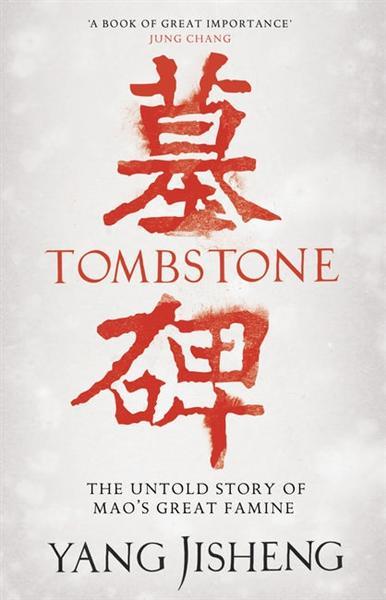
This strikes me as the fluffiest form of faux-Confucianism, uninformed by serious engagement with Chinese history or philosophy. Has he never read Mozi, the inspiration of an early Chinese utilitarianism? Is he familiar with Han Feizi, who rejects the government-as-family metaphor? Or the myriad ways in which family interests can clash with, and thus often take precedence over, state interests? How one could ignore the horrible assault on families and family institutions by a tyrannical state during the Great Leap Forward, and by omission assume that the memory of tens of millions of deaths is politically and culturally insignificant, is beyond me.
So, to answer the question that Jacques poses, no, China is not more legitimate than the West. Not, at least, until the CCP allows for truth telling about the worst famine of the twentieth century.


 The Useless Tree
Leave a reply to godfree Cancel reply