China Heritage Quarterly, a marvelous publication from Australian National University, has a special double issue on an early 20th century Chinese publication, The China Critic.  There's a lot of great stuff there.  But one piece has gotten some play on my twitter feed, and deservedly so: Lin Yutang's "Confucius as I Know Him," a satirical little essay on the foibles and flaws of the great sage.  It is a fun read – fun, at least, for those who have read a little Confucius.

Lin references The Analects and Shiji to draw a rather unflattering portrait of Confucius. The sage could be spiteful, as here:

Let us begin with some examples of his practical sense in the Confucian Analects.
Even if not everything recorded therein was true, it was at least what
Confucius' own disciples said of him. The Third Chapter tells us that
once Ju Pei went to call on Confucius. Confucius disliked the fellow and
told him that he was ill, which is the oriental equivalent of your 'not
at home'. A Western gentleman would stop there. But Confucius went one
better. When Ju Pei was just outside the door, he purposely took a
mandolin, and not only played on it but also san
[g] in order to make the
visitor realize that he was in the house after all. When we read the
empty praise by his disciples that Confucius was always polite and
well-poised' we must, therefore, take it with a grain of salt.

It continues in that vein.  Lin makes many humorous flourishes, as we might expect from a writer who worked to introduce western notions of "humor" into Chinese texts and contexts (he actually coined the standard Chinese translation for "humor" –
幽默).  Confucius, it seems, was rather particular in his eating habits, causing Lin to remark:

Think of a German wife trying to serve a German supper without the help
of the delicatessen! Is it any wonder then that Confucius' wife, who was
married to him at below the age of nineteen, found it hard to submit to
this family discipline?

And, yes, Lin reminds us of Confucius's marital failings:

According to Li-ki [Liji, Classic of Rites], a series of chapters or books compiled by
the Confucian followers, and recognized as one of the Confucian
classics, the Confucian family held a record of three divorces in three
successive generations: Confucius, his son and his grandson. In the case
of Confucius' daughter-in-law, she ran away to marry someone else, but
this does not alter the question that his son's marriage was a failure.

Confucius himself, as I have said, was a man of fine feeling and
extremely good taste. His love of music was well known: when he heard
the old music of Shun, he was spiritually so upset that he forgot the
taste of meat for three months. No one who was not sensually something
of an epicurean or who was not capable of surrendering to the music with
all the force of his emotions, could speak of music in the ecstatic
fashion that he did. But he was an epicurean not only in music, in his
love of curios, his passion for the antique, but also even in the
personal matters of eating and clothing. My suspicion is that it was his
over-refinement in the matter of food that caused his divorce.

And there's more; read the whole thing.

It's important to recognize that Confucius was not perfect.  He may not have lived up to the standards of behavior that he preached.  And that is instructive.  As I say to my students regularly: it's hard out here for a Confucian (yes, that is a popular cultural allusion).  But that doesn't mean we shouldn't take the philosophy and ethics seriously.  We should.  We just shouldn't expect most people to be perfect Confucians all the time.

The piece is also interesting in what it shows us about Lin Yutang.  He's a fascinating guy.  An early-to-mid-twentieth century modern bicultural interpreter and translator.  By that I mean, an intellect positioned between China and America who worked to bring ideas and cultural practices from each to the other.  Confucius, thus, poses something of a problem for him. "Confucianism,' in its sprawling historical presence, is at once both a source of inspiration and an obstacle to cultural modernization.  Thus, Lin pokes fun at the outmoded foppishness of Confucius, but tries to preserve something of the tradition:

But with all his shortcomings, inconsistencies and often unscrupulous
conduct, Confucius remained a very charming character. The charm lies in
his evident sincerity of purpose. When a man is sincere, we can excuse
many of his evident faults.

I suspect Lin tried to hold on to that view in relation to his acquaintances in his own time.
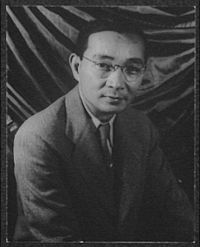

Linyutang

Sam Crane Avatar

Published by

3 responses to “A Vain and Flawed Confucius”

  1. melektaus Avatar
    melektaus

    Didn’t read the article but the examples cited seem trivial quibles. Perhaps the quibles of a petty individual.
    I don’t know Confucius, what he was like, but neither does the writer but from what was so far cited it doesn’t sway my view of him one way or the other.
    However, if those are the worst of his “vices,” even if he did have them, he is better than most.
    As for the story in the Analects about Confucius turning away someone he dislikes with such style, that shows nothing to me about the quality of his character.
    I happen to think that politeness isn’t always a virtue. In fact, I think it’s often a vice to be polite. Who would be polite next to a fervent Nazi? A coward or a sympathizer are two examples who clearly would. I think this culture and perhaps Chinese culture too places way too much emphasis on politeness as a virtue. It often hampers democratic processes. Focusing on things like “tone” of one’s voice detracts from more substantive issues like strength of argument. I am nearly certain Confucius would agree with this view on politeness.
    There are better stories about Confucius one could have used to demonstrate his “lack of civility.” There’s the story that he once hit one of his students over the head with a cane. Another story has him sentencing a man to death. These are almost certain apocryphal but not any worse as a source than some sources often used to describe him.
    As for Confucius’s divorce, it just seems presumptuous to put the blame on him without knowing. People get divorced for all sorts of reasons. This is the case today and was always the case. Blaming it on the moral failings of Confucius just seems like a bit of stretching.
    And where does Lin get the idea that Confucius was an “epicurean”? That seems an incredibly odd thing to say. Confucius did not admire those who cared deeply about cloths and food. He admired people who didn’t care if they ate course rice for the rest of their lives and wore rags but devoted their lives to studying and thinking, not in the “epicurean.”
    I really don’t understand where this urge to denigrate Confucius comes from. If there were some real evidence of his vices and evidence of loathsome behaviors then I’d understand. He would deserve it. However, this urge from both the west and from some “intellectuals” in China just seems like character assasination, just stretching things to fit some kind of agenda or festering prejudice. They’re indcredibly silly criticisms, often both groundless and trivial. I don’t think that’s even under dispute in it’s obviousness. What is puzzling to me are the motives for it. I can more readily understand western peoples’ urge to denigrate him but what is the motive for Chinese people? Are Chinese people that uneducated as to blame him for the backwardness of China for the last two centuries?
    Made a related post recently here
    http://blog.hiddenharmonies.org/2012/09/defaming-confucius/

    Like

  2. Ngok Ming Cheung Avatar
    Ngok Ming Cheung

    meletaus
    I do agree the incidents cited are trivail, but I think Lin Yutang was trying to put a sense of humor and may be push Confucius slightly off his pedestal. Whether you think the criticism is justified or not I do think his status as a saint was a hindrance to the modernization of China in early 20th century. Just as much as the status of Mao as beyond criticism today is a hindrance to reform in China today.

    Like

  3. melektaus Avatar
    melektaus

    “I do agree the incidents cited are trivail, but I think Lin Yutang was trying to put a sense of humor and may be push Confucius slightly off his pedestal. Whether you think the criticism is justified or not I do think his status as a saint was a hindrance to the modernization of China in early 20th century. ”
    That’s ridiculous. The Backwardness of China is because of the backwardness of the Chinese people and other factors too like famine and imperialism. They need to take some responsibility for part of that and not blame others who had no role in it and lived and died over 2000 years before the backwardness of China. That’s how they can begin to advance.
    “Just as much as the status of Mao as beyond criticism today is a hindrance to reform in China today.”
    This is also silly. Beyond criticism? Have you ever even been in China within the last 10 years? Many Chinese people have open criticisms against Mao in China today. I see it common everyday people. I see it in academics. I even heard politicians criticize Mao.

    Like

Leave a reply to melektaus Cancel reply