People are talking about the article that ran in Sunday's NYT: "The Busy Trap," by Tim Kreider. It's a fun piece, but Kreider misses an opportunity here: the obvious link to Daoism. Obvious, at least, for those of us who think Daoist thoughts….
Here is Kreider's defense of idleness (which is something close to the heart of anyone willing to defend uselessness):
Idleness is not just a vacation, an indulgence or a vice; it is as indispensable to the brain as vitamin D is to the body, and deprived of it we suffer a mental affliction as disfiguring as rickets. The space and quiet that idleness provides is a necessary condition for standing back from life and seeing it whole, for making unexpected connections and waiting for the wild summer lightning strikes of inspiration — it is, paradoxically, necessary to getting any work done…
He goes on to quote Pynchon, which is all well and good, but, come on… how about a little Daodejing here:
To work at learning brings more each day. To work at Way (Dao) brings less each day,
less and less still until you're doing nothing yourself. And when you're doing nothing yourself, there's nothing you don't do.
To grasp all beneath heaven, leave it alone. Leave it alone, that's all, and nothing in all beneath heaven will elude you. (48)
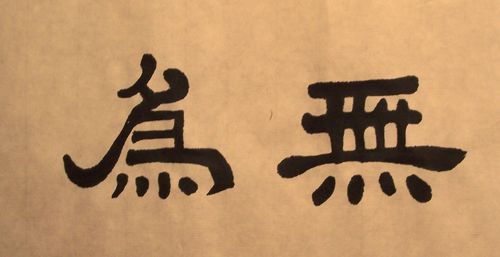
If you do nothing, there's nothing you don't do. Or maybe a passive voice gets at it better here: there's nothing that is not done. That classic Daoist notion of wu wei – 無為 – "doing nothing," can suggest a certain activity: nothing is doing. That is, something is happening – indeed we could say everything is happening – when you are doing nothing…. how's that for a defense of idleness!
Kreider also points out:
Busyness serves as a kind of existential reassurance, a hedge against emptiness; obviously your life cannot possibly be silly or trivial or meaningless if you are so busy, completely booked, in demand every hour of the day.
He points out the futility in this, but an even stronger refutation can be found in Zhuangzi:
Once we happen into the form of this body, we cannot forget it. And so it is that we wait out the end. Grappling and tangling with things, we rush headlong toward the end, and there's no stopping it. it's sad, isn't it? We slave our lives away and never get anywhere, work ourselves ragged and never find our way home. How could it be anythings but sorrow? People can talk about never dying, but what good is that? This form we have soon becomes others, and the mind vanishes with it. How could it be called anything but great sorrow? Life is total confusion. Or is ti that I'm the only one who's confused? (2.3)
It is important to remember here that Zhuangzi is not a morose Scandinavian existentialist. The apparent futility of our lives, to him, is not cause for depression and sadness and suicide. Rather, it is simply a reminder not to get caught up "grappling and tangling with things." Just chill, he might counsel. Things will work out. Amazing things will happen, along with the bad stuff. But it will all add up to a meaningful life on its own terms. Just don't try to do too much or set overly grand expectations because, ultimately, busyness doesn't work….


Leave a Reply