Two contrasting articles suggest how demographic and social-cultural changes in China are making it ever more difficult to realize Confucian virtues there.
First, we have a piece in The Economist that reports on the growth of nursing homes – or, old age homes; assisted living centers; etc. – in China, and how that growth reflects a cultural change in terms of expectations of how care of aging parents should be carried out. One interesting point here is how religious, and specifically Christian, organizations are taking up the responsibility to create old age homes and care for the elderly. So, Christians are doing the work of Confucians here… or, to be more charitable (a virtue for both Christians and Confucians), what we have here is a felicitous intersection of moral theories. Whatever.
The other, less sanguine, implication is that these sorts of facilities are costly. And, even if public financing arrangements are available, invariably inequalities will emerge. The rich will have more and better options; the poor fewer and meaner.
To project forward a bit: it is rather easy to imagine the privileged class having an easier time paying someone else to care for their parents in a place other than their own homes – the American model, if you will. In short, they will be able to buy their way out of the more strenuous demands of filiality, which might include keeping parents at home and being personally involved with their care.
To be clear: I do not think that arranging care for elders at arms length is, in and of itself, somehow an immoral thing. Quite the contrary, from my own personal experience, I very much understand the difficulties of managing the demands of modern life and the physical demise of parents. (NPR is running a series of stories on just this subject: Family Matters) My first intention here is simply oobservational: China is subject to these same modernizing pressures and old notions of filiality and parental care are giving way to new realities and arrangements.
But I do want to make a critical point, and that is the same point I would make about elder care in the US: the poor should have reasonable access to good and affordable and secure care for the elderly. We know this is a problem in the US. And this story from ChinaSmack suggests that it is also a problem in China:
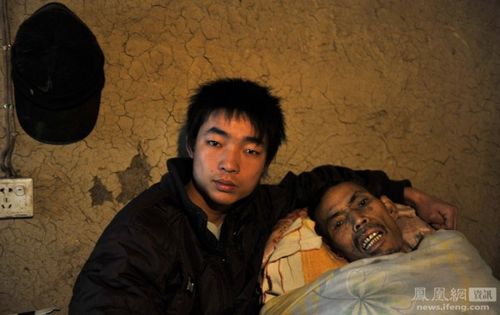
Filial Son Returns Home to Be With His Dying Father
It is a sad tale: a young man, Cheng Jilai, from a poor family gets a chance to go to college but gives it up when he realizes his father is dying and there is no one to care for him at home. It is clear that this family has few options because they have little money. And so it falls to the son, in this case, to orient his life to the care of his father, a truly virtuous course from a Confucian perspective. If the son had access to, and could have faith in, something like a nursing home for his father, he might be able to choose to continue in college. But he doesn't have that choice. He could simply abandon his father, a choice that would be widely criticized, and not just by Confucians. He has to take care of his father. He has to do the right filial thing.
Maybe I'm being a bit too harsh here. Rich people who can afford good and comfortable nursing homes for their parents are also carrying out their filial duty: they are finding the best possible conditions for their parent's care. Even if nursing homes are seen, by some, as inherently un-Confucian. But the story of Cheng Jilai, the filial son whose poverty gives him no choice but to give up college and go home to care for his father, on the face of it, seems more true to the standards of Confucian filiality.
And if that is true, we are left with a rather uncomfortable conclusion: it is only the poor who have to carry out a more traditional Confucian morality because the rich have the means to make other arrangements….


 The Useless Tree
Leave a reply to Matthew F Cooper Cancel reply