Alistair J. Nicholas, an expatriate pr exec in Beijing, pens a piece in the China Daily that reflects upon cultural differences between China and the West, especially in corporate workplaces. There are some useful insights into how to get things done and not make a fool of yourself. But from the very first paragraph he falls into the unfortunate practice of using the term "Confucianism" as a stand-in for contemporary Chinese culture:
The hierarchical nature of Chinese society and the role of hierarchy in the realm of modern social structures defy explanation to Westerners who come from more egalitarian societies. Even after 12 years of living in China, I am confounded by the continuance of this most Confucian inheritance of China's past.
This is a airly typical statement, hearkening back to the Gellner quote above: Confucianism, in practice (and I want to stress that here: what was practiced as "Confucianism" diverged from certain ethical expectations of "Confucianism"…) authorized hierarchical social and political relationships. So far nothing out of the ordinary here.
But problems set in when we get statements like this:
Of course, there is a downside to China's strict hierarchical structures in business: namely, that merit may be overlooked – or expected to be overlooked – in the rise to the top of the pyramid.
Confucianism, of course, envisions a meritocracy of sorts, an ethical meritocracy: the morally superior should rule and lead. And we know who the morally superior are not because of what school they went to or who their daddy is but by their actual performance of right actions. Moral achievement is not existential, it is performative. Thus, if hierarchy is obstructing meritocracy that is a sign of the failure of Confucianism, not its consequence.
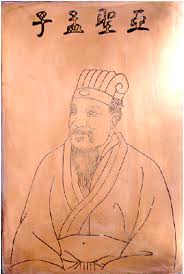
Of course, we could argue that Confucianism is still culpable because, in the first instance it authorized hierarchy, which then goes on, in an un-Confucian way, to obstruct meritocracy. But this strikes me as an unfair critique. Confucianism stands against unmeritorious hierarchy: this is very much the life's work of Mencius…
Another problem emerges with this statement:
But Chinese hierarchy can result in other unfavorable outcomes if not fully understood. For example, Chinese are reluctant to question or challenge their superiors because they have been brought up to respect their elders and others in authority.
While respect for elders is certainly a Confucian idea, it is not unqualified. If elders and/or superiors are doing the wrong thing, children and subordinates should respectfully point out the problem. While passages from the Analects could be cited here, I like this excerpt from Mencius:
If you don’t resent a parent’s fault when it’s serious, you’re treating parents like strangers. And if you resent a parent’s fault when it’s slight, you’re treating parents with abandon. Treating them like strangers, treating them with abandon – either is no way for a child to honor parents. (12.3)
Children, to really honor parents, should treat them as neither strangers nor with abandon. They should let parents know when there are problems.
In any event, whatever traditional Chinese culture was, or contemporary Chinese culture is, it cannot be simply reduced to "Confucianism," because there are aspects to the culture, old and new, that clearly run against the grain of Confucian morality.
Chinese culture has always been more than "Confucianism."


 The Useless Tree
Leave a reply to Christopher vanDyck Cancel reply