A nice little piece by Didi Kirsten Tatlow on "Mao's Spell and the need to Break It" in yesterday's NYT.  She focuses on Robert Bellah, the venerable sociologist of religion (see review of most recent book here), and his thoughts on the revival of religion and the prospsects for Confucianism in contemporary China.  Bellah sees Mao as obstructing the return of Confucius:

But according to Robert N. Bellah, one of the world’s foremost sociologists of religion, to establish true freedom through a societywide, ethical framework that is connected to Chinese traditions, the country first must break the tyrannical spell cast by Mao Zedong, who led the Communists to victory in the civil war in 1949 and ruled with an iron fist until his death in 1976.

This strikes me as a key issue in determining the extent to which Confucianism can come to have a significant cultural impact in China today.  To be clear: I am of the mind that China is not now a Confucian society.  It is too deeply ensconced in modernizing projects for something like a genuine Confucian ethic to have more than a marginal effect.  Clearly, there has been a certain social tendency to revive some aspects of the Confucian tradition to supply a deeper cultural meaning for contemporary life.  But that effort is limited by the powerful material interests and incentives that work to undermine a fuller expression and practice of Confucian ethics.

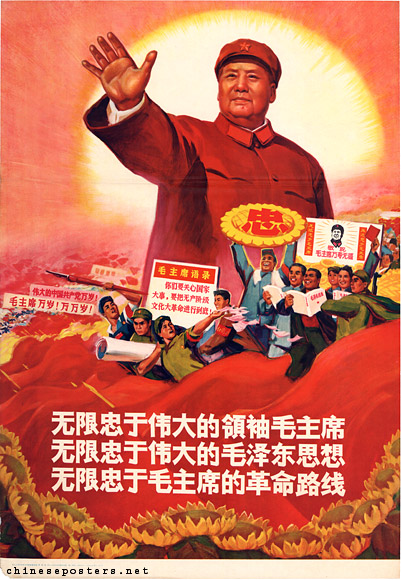
Bellah's point thus highlights another aspect of the problem, the political aspect. It is rather simple: Mao was not a Confucian, indeed he was a resolute anti-Confucian, and his continuing symbolic presence at the center of political life – right there over the main gate of Tiananmen – is a major obstacle to the renaissance of Confucian philosophy-as-a-way-of-life in China.  Bellah doesn't pull any punches:

“I think China has to face the fact that Mao was a monster, one of the worst people in human history,” said Mr. Bellah.

He compared China’s situation today to that of Germany and Japan after World War II.

“In a curious way, it’s like the war guilt of Germany or Japan. I think in Germany they’ve come to terms with it, whereas in Japan there’s almost a dramatic lack of any sense of responsibility,” said Mr. Bellah, who is also a Japan scholar.

“There is so much self-pity in China about the Western powers and the 150 years of imperialism, and about the Japanese aggression” of World War II, said Mr. Bellah. “And it’s justified in a way.”

“But God knows what Mao did can’t be blamed on the Westerners or the Japanese,” he said. “The Chinese have their own guilt, and it requires a complex symbolic, ideological and psychological change, and that’s hard.”

This is where Chinese nationalism runs up against Chinese tradition. To be true to the revived tradition, it is necessary to destroy an icon of modern nationalism.  My sense is that Mao will continue to win because he, and his historical legacy, is more important to the CCP than is Confucius.

The depth of the problem can be discerned in a China Daily op-ed from earlier this month.  Zhang Zhouxiang reports on Bellah's recent lecture in Beijing and reflects upon the revival of tradition.  He starts to wander into dangerous political territory (dangerous, that is, when confronting CCP censors) when he writes:

While many scholars claim Western traditions to be the source of the modern concept of rights and obligations, Bellah says that similar themes exist in Confucianism. "Confucius urged the exercise of power through li, not through punishments, which will only encourage the people to be devious."

An essential element in Confucius' social design, li is emphasized by Bellah as a rights pattern, a mutual obligation between rulers and subjects. While justifying the ruler's right to rule, li also requires him to do good to and take care of the ruled. The ruled are asked to maintain order, but they also have the right to choose another ruler if the covenant is broken.

The allusion here is to Mencius, who does not really put forth a generalized "right to rebel" but does offer an idea that the elite (ministers from royal families) have an obligation to remove a tyrannical leader.  But the way Zhang expresses it here – "the right to choose another ruler…" – is inching in the direction of democracy.  That's a fairly common move for certain readers of Menicus (I'm looking at you Kim Dae-Jung), and with a little interpretive help Mencius can be made consistent with liberal democratic principles (even if he was not a liberal democrat himself).  There is no one necessary political form that Mencian Confucianism must take, and an electoral system need not be contradictory to the spirit of the text.  But this is not the direction the Party wants to move.  Indeed, the Party continues to limit the protection of legal and civil rights.  

In the end, the Party is really not interested in li – ; propriety, ritual. Rather, it is more interested in li; power, force, strength – and li; interest, profit .  And these lis are not at all what Confucius and Mencius value.
Maozhong

Sam Crane Avatar

Published by

13 responses to “Mao and Confucius”

  1. Peter Vernezze Avatar
    Peter Vernezze

    I agree with your conclusion but find it rather depressing. Confucianism will never flourish because, as you say, Mao will always win. Bellah’s call for “a new civil religion” has to be said to be a pipedream. What are the implications? Where do you think all this is headed?

    Like

  2. Justice&Mercy Avatar
    Justice&Mercy

    I agree that Marxism is fundamentally incompatible with Confucianism. I don’t see Mao as “the big issue”, however – If Confucianism is revived, then the eventual goal must be to repeal all May Fourth thinkers.
    I also disagree with “reworking” Confucianism to fit modern liberal ideas such as equality. While all humans can potentially become sages – and in this sense all humans are equal – there are also important aspects where humans are not equal.

    Like

  3. Bill Haines Avatar
    Bill Haines

    Hi J&M,
    “there are also important aspects where humans are not equal”
    — well, everybody agrees with that, yes?
    Does the idea that all people can become sages have any practical implications?

    Like

  4. Justice&Mercy Avatar
    Justice&Mercy

    Dear Bill Haines,
    The idea that all people can become sages means that a person should not be discouraged when he feels that his ability is less than that of a sage.

    Like

  5. Justice&Mercy Avatar
    Justice&Mercy

    As for “there are also important aspects where humans are not equal” – I believe that a society should not adopt equality as its transcendental value. Such an ideal will not lead to social harmony, because each person will see himself as receiving less than what he deserves. The result is unending social revolutions.
    A better ideal is fairness. One must believe that the universe is fundamentally moral, that there are eternal laws governing good and evil, fairness and unfairness. If two persons dispute after entering a transaction, what is important is not who is richer, or what social class each belongs to, but rather who is in the right, who is in the wrong, and what would be a fair and equitable resolution.

    Like

  6. Justice&Mercy Avatar
    Justice&Mercy

    Lastly, human conditions are in one aspect equal – True honour resides in morality rather than social class, and even a person of the lowest social class, if he comports himself morally, deserves honour.

    Like

  7. Bill Haines Avatar
    Bill Haines

    Hi Justice&Mercy,
    “The idea that all people can become sages means that a person should not be discouraged when he feels that his ability is less than that of a sage.”
    A
    Is that the main practical implication – so the idea about universal potential doesn’t have any implications for institutions?
    B
    I’m not sure what your point about the idea comes to exactly. The point could be that the idea is a comfort in case one is upset at the apparent lack of ability to become a sage; that the practical value of the idea is that it makes people feel a little better.
    Or it could be that the idea gives everyone reason to continue to try to become sages. As their main or only overall project?
    C
    I’m not sure what the idea itself comes to exactly. “Can” or “potential” is a pretty slippery sort of term. When we say X “can” φ, we often mean to say of a certain specific understood class of things (external physical obstacles, the prison system, etc.) that it is not standing in the way of X’s φ-ing; or alternatively we might mean that conditions are such that if X decides and tries to φ, X will in fact φ. But the problem, or at least one of the problems, about sagehood is that one doesn’t know what to do.
    Suppose (however implausibly) that the authoritative answer is that anyone will become a sage if she follows some course of action that involves long study of the classics. Set aside the people who lived before the classics. Still, arguably most people lack access to such a program: for example, people who are prevented by social duties or lack of wealth from learning Chinese and/ from devoting years to focused study of the classics. These people should be discouraged, yes? Not to mention those who are predictably just not going to live long enough.
    Actually I suppose that for someone who doesn’t currently have reason to believe the authoritative answer – i.e. most people now -, simply believing the authoritative answer and starting on the program would be irresponsible and thus morally wrong. I suppose you don’t take that to argue against the idea, but the fact that you don’t may help show that the idea could use some clarifying.

    Like

  8. Justice&Mercy Avatar
    Justice&Mercy

    Bill Haines,
    I just posted an in-depth reply to your comments. However, it was lost in the site. (This keeps happening for some reason.)
    I’ll respond again a bit later.

    Like

  9. Bill Haines Avatar
    Bill Haines

    Alas again!!
    I almost always write mine in word and then paste them into the box! 🙂

    Like

  10. Bill Haines Avatar
    Bill Haines

    J&M, you write, “I believe that a society should not adopt equality as its transcendental value. Such an ideal will not lead to social harmony, because each person will see himself as receiving less than what he deserves. The result is unending social revolutions.”
    I don’t think of liberalism as involving transcendental ideas of any sort, but I guess what you mean by that term is the combination of three things: “simple slogan or inspiring image” and “view about fundamental grounds” and “view about the ideal sort of concrete situation.”
    The latter two are very different. Utilitarianism, for example, takes everyone into account equally on the level of fundamental principles, no matter how far in the future they are; but tends to imply that we ought to take relatively little account of the interests of far future people in our explicit decisionmaking. And Rawls doesn’t think that ideally we shouldn’t know who we are.
    Some views involve more focus on ideals than others. Liberalism, in the sense in which this is contrasted with Confucianism (say, the Federalist Papers, Adam Smith, and an opposion to discrimination on the basis of race/sex/sexuality), doesn’t involve much in the way of ideals, I think. It needs simple slogans and images when under challenge, but (a) liberty is as important to liberalism as equality, on that level; and (b) as Mill wrote in Utilitarianism 2, “There is no difficulty in proving any ethical standard whatever to work ill, if we suppose universal idiocy to be conjoined with it.” Liberals tend to talk about equal opportunity, equal rights, equality before the law, equal representation, and some kind of equality regarding tax rates – that is, abstract kinds of equality, like Aristotle’s fairness.
    As you probably know, in Attic Greek the word for equality in math was also the word for fairness, so when Aristotle explained justice in distribution by merit and justice in transactions, he did so in terms of mathematical equality (distribution of e.g. power in equal proportion to the relevant merit, and transactional fairness in terms of strict equality of services rendered or costs undertaken, not proportioned to the virtue or status of the parties, though Aristotle struggled with this). Does Confucianism have an alternate conception of fairness?
    To make honor realistically available to those not well endowed with wealth or brains, I think it’s helpful to recognize a distinction such as Lon Fuller’s distinction between morality of duty and morality of aspiration, which you might have encountered – – i.e. between basic fairly clear rules, obedience to which is realistically within everyone’s reach, and greatness.

    Like

  11. Justice&Mercy Avatar
    Justice&Mercy

    Dear Bill Haines,
    Well, I can’t really speak for Confucianism here, since there are so many views as to what Confucianism actually implies.
    With regard to the distinction between fairness and equality: Suppose person A entered into a bargain with person B. At the time, person A believed the bargain to be mutually advantageous. Later, events transpired so to make the bargain entirely disadvantageous to person A. In this case, it would, in my view, be fair to hold person A to the contract, because he gave his word.
    However, legislation aimed at creating “equality” often override this. The Court will read various statutes into a contract, in an effort to level bargaining positions. This is an example of equality.
    (It seems to me that if a person intent on certain conditions enters into a contract, he should stipulate them as he negotiates the contract. If he is unable to negotiate those conditions, he should either accept the contract as it is, or otherwise decline the contract. It is unfair for a person to override an agreement after the fact, especially if the law is not clear on that issue in the first place, or if neither party contemplated the application of such statutes.)
    Another example is with succession. I believe that it is fair for a person to dispose all of his property in favour of his family, if that is his choice. Certain people, more concerned with equality than I am, would argue for a redistributive scheme where the government takes a large part or even all of a deceased person’s property.
    It should be noted that Confucianism promotes hereditary nobility, which perhaps would not be equality, but which in a deeper sense is fair.
    It should be noted that fairness is not always easily explainable. This is because it arises innately. This innate sense of fairness can be established, because all human societies recognise it, even if they differ on particular applications.
    I believe that fairness should be the guiding principle in human societies. Certain schemes may be acceptable to mitigate the full rigour of the principle of fairness, but a society should not actively pursue an ideal of equality.

    Like

  12. Bill Haines Avatar
    Bill Haines

    I have to agree with you that in general, it’s fair that people be held to what they’ve freely agreed to (at least with consideration). I guess Aristotle was talking about other issues of substantive fairness in exchange. He didn’t think of free market theories of fair pricing, and he was interested in the deliberative question “what would be a fair exchange or return?” that people might face when approaching a possible agreement, or that we face in less formal transactions such as the return of favors in friendship and other associations, or in political systems insofar as their distribution of power could be thought of as exchange, which he seems to have thought it sorta could be.
    Aristotle as I read him thought that the heart of fairness is about “arche” or rule, whose versions or realizations involve political office, honor, and the power to determine things by one’s free choice.
    I agree that this is all very difficult stuff!
    I wonder if there is a Confucian term that you think might fairly be translated as “fairness.” And insofar as fairness is based on free choice, I wonder whether one can make sense of filiial piety as trying to approach a fair return for benefits received.
    I don’t think liberal theory has neglected the fairness of free choice and contract; if anything it may have overvalued that – unless by “liberal” one means “left-liberal” as in the context of U.S. politics, i.e. mainly a tendency to insist on PC language and favor the redistribution of wealth.

    Like

  13. Bill Haines Avatar
    Bill Haines

    From Justice&Mercy, posted with his permission:

    Dear Bill Haines,
    For some reason, I can’t post on the Useless Tree website. Anyway, in response to your comment on honour, I feel that I should clarify my personal beliefs about it:
    With respect to honour…Again, I’m speaking from personal beliefs, rather than Confucianism per se.
    It seems to me that there are at least two types of honour. The first type of honour is that which is accessible to a person as a human being. The second type of honour derives from social station.
    For instance, even a beggar, when he is accepting food from others, should be treated with respect. This respect arises, not because he is a beggar, but because he is a human being. This is the first type of honour.
    Even though all human beings deserve the first type of honour, this honour is overlaid by the second type of honour. For instance, one treats a serf differently from a lord. It would not be appropriate to treat a serf and a lord the same way.
    Other factors may also modify honour. A woman’s honour, with regard to her existence as a woman, derives largely from chastity. A woman may acquire honour in other ways, such as talent and station, but these types of honour would not arise from her existence as a woman.
    Now, honour creates a presumption of behaviour which befits the particular honour given. A lord should behave in a way which befits a lord. A serf should behave in a way which befits a serf. Shame arises when a person falls short of the honour given to him.
    For instance, if I invite you to dinner and honour you as a guest, you are obligated to act in a way appropriate for a guest. If you act inappropriately, then you have fallen short of the honour which I gave you.
    Honour as explained above appears external, because it deals with behaviour. Yet ultimately, honour is internal, because all humans are born with an innate sense of honour. This innate sense of honour creates an innate desire to act honourably. It’s just that some humans have transformed this desire into reality, while others haven’t.
    (1) In sum, there are many types of honour. (2) All humans are at minimum deserving of the honour which befits a human being. (3) A person may fall short of the honour due to him, which creates shame. (4) Honour is ultimately internal.

    Like

Leave a comment