I guess when you get quoted in The Economist you should post a link to the story. And so, here it is: Sun Tzu and the art of soft power. (I don't appear until about 2/3 of the way down).
The gist of the piece is that China has been barking up the wrong soft power tree (so to speak) in its attempts to develop Confucianism into a soft power resource:
But Confucius is problematic. Mao and his colleagues regarded Confucius’s philosophy as the ideological glue of the feudal system they destroyed; and so attempts to promote him are vulnerable to the growing split in the Communist Party. In January, with great fanfare, the National History Museum unveiled a bronze statue of him standing 9.5 metres (31 feet) high in front of its entrance by Tiananmen Square. Three months later the statue was quietly removed. The sage’s appearance so close to the most hallowed ground of Chinese communism had outraged hardliners. They saw it as an affront to Mao, whose giant portrait hung diagonally opposite.
As regular readers of The Useless Tree (both of you) know, I have pressed this argument further, and anyone interested in just how far I press it can look at this post on "Why Confucianism will not provide 'soft power' to the PRC"
I also think The Economist piece gets it right on Sunzi. Generally, Sunzi is easier to integrate into contemporary modernist and post-modernist political and social practices. Indeed, it has already been so integrated, as evidenced by its invocation in business and military and political and, even, dating books (I haven't read it – obviously – but I'm sure Confucianism will not produce a title quite like this: The Art of War for Dating: Master Sun Tzu's Tactics To Win Over Women). This may seem frivolous but I think that "soft power" cultural resources have to be flexible and popular and fun to create the kind of "attractiveness" that the notion implies. And, long story short, that is a big part of the reason why Confucianism is just not working as a source of soft power: it is too serious and demanding.
But Sunzi, as the article suggests, poses a problem for the PRC's soft power strategy, because it does not project the image of China that Party propagantists want to project. Notice these line:
Sun Tzu may have written about stratagems for warfare, but Huimin’s [in Shandong province] assembled scholars prefer to tout him as a peacenik. Their evidence is one of the sage’s best-known insights: “The skilful leader subdues the enemy’s troops without any fighting.” What better proof, say his fans in China, that the country has always loved peace?
Of course Sunzi is not a "peacenik". He is a military strategist who believed that battles can be avoided if the protagonist has amassed such superior power and strategic positioning that the adversary simply recognizes the futility of a fight. It is a very "hard power" calculation. But the idea that China has "always loved peace" is a political and historical fiction inscribed into contemporary Chinese national identity, and it is a theme that Party and military powerholders find useful in propagating, especially to other regional states, like Vietnam and Japan, that are concerned with the growth of PRC military capabilities.
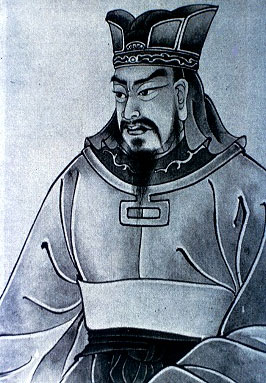
Thus the paradox of Sunzi's "soft power:" the strategic vision of Sunzi is widely known and studied and respected, but it creates an image of China as a potentially devious, deceptive (remember, for Sunzi, war, and by Clausewitzian extension, politics, is all about deception) and self-interested power, not quite the picture Beijing wants to paint. Better to have the avuncular smile of Confucius than the calculating glare of Sunzi…
And here, for posterity, is the textual equivalent of fifteen minutes of Economist fame:
Yet a closer look reveals Sun Tzu’s flaws as a tool of soft power. Chinese attempts to remould him as a man of peace stumble over the fact that his book is a guide to winning wars, avidly studied by America’s armed forces as it was by Mao. Sam Crane of Williams College in Massachusetts says that during the Abu Ghraib prison scandal in Iraq he delighted in telling students attending his Sun Tzu classes (some of whom were preparing to join the army) that the “Art of War” advised that prisoners be treated kindly. But, he says, “I think the thing that makes [the book] universal in a grim way is war and competition. War is not a Western construct: the Chinese have been really good at war for a long time.”


 The Useless Tree
Leave a reply to Maitreya Cancel reply