As regular readers (both of you) know: I have an interest in theater and recently appeared in a college production of "Streetcar Named Desire." So, it was marvelous last night to see the riveting production of the same show put on by the Williamstown Theater Festival, with a captivating performance by Jessica Hecht as Blanche. A great show.
A particular passage of that play speaks directly to the content of this blog. In scene four, the morning after the fight between Stella and Stanley, Blanche is saying to her sister that she should get away from that brute of a husband, but Stella demurs. She loves Stanley and does not want to leave him. Blanche is flabbergasted:
Stella: I said I am not in anything that I have a desire to get out of. Look at the mess in this room! And those empty bottles! They went through two cases last night! He promised this morning that he was going to quit having these poker parties, but you know how long such a promise is going to keep. Oh well, it's his pleasure, like mine is movies and bridge. People have got to tolerate each others habits, I guess.
Blanche: I don't understand you. [Stella turns toward her] I don't understand your indifference. Is this a Chinese philosophy you've cultivated?
Stella: Is what – what?
Blanche: This – shuffling around and mumbling – 'One tube smashed – beer-bottles – mess in the kitchen!' – as if nothing out of the ordinary has happened! [Stella laughs uncertainly and picking up the broom, twirls it in her hands.]
The questions that come to mind: What is Williams thinking here? Why would he invoke "Chinese philosophy"? What understanding of that term does Blanche have? What kind of understanding is possible for either the character or the author?
Williams was born in 1911. He attended three different colleges: the University of Missouri, Washington University in St. Louis, and the University of Iowa, from which he graduated. He studied journalism and literature and, thus, may have come into contact with various strands of Chinese thought that were then circulating in modernist, and modernizing, America. Ezra Pound's "translations" (not quite the right term, since he did not read Chinese) of Confucius and various Chinese poets come immediately to mind – a source that might have been of interest to a young playwright with a poetic bent. Thoureau, too, had been another early conduit to America of Chinese ideas.
So, Williams, as a well-read man of letters, had some sense of "Chinese philosophy." But the above passage from "Streetcar" suggests it was an inchoate sense at best.
For Blanche, and we might surmise for Williams as well speaking through Blanche, "Chinese philosophy" is suffused with "indifference." Stella's resistance to seeing clearly Stanley's brutality, her "shuffling around and mumbling," is the stuff of "Chinese philosophy."
Maybe this was Williams' impression of Daoism, which, indeed, champions a kind of indifference. Tolerance, too, which Stella offers here, might also be put down as a Daoist virtue: we should not interfere in the natural unfolding of Dao, in general, or with other individual's experience in Dao – that's a sort of tolerance.
So, perhaps what Williams means here is not "Chinese philosophy" but Daoism. If he had taken Confucianism seriously, or whatever understanding of Confucianism he might have gleaned from the English-language sources then surrounding him, Williams would see that Stella is acting an a completely reasonable and ethical manner: she is defending and cultivating one of her closest loving relationships, with Stanley, even in the face of a bad act on Stanley's part. Indeed, a Confucian analysis gets at the deep tragedy of Stella: she is caught between two close loving relationships: that with her husband and that with her sister. Both are flawed. Which should take precedence? Ultimately, she makes the right Confucian choice. When the arrival of the baby is factored into the ethical equation, her duties to her immediate family with Stanley are greater than her obligation to her sister.
I could go on with a Confucian analysis of the play (Blanche demonstrates a certain Confucian virtue by staying and caring for her dying parents at Belle Reve – but you get the idea…)
The point here is to call out Williams and what he means by Blanche's invocation of "Chinese philosophy." Of course, I shouldn't necessarily assume that Blanche's understanding is simply a reflection of Williams'. Maybe Williams is using this reference as a sign of Blache's faux intellectualism, her dilletantism. She can utter the term in a vague manner, without really appreciating what it could imply. Certain mushy Daoist-y images of indifference and mumbling (Zhuangzi comes to mind…) are what is suggested by "Chinese philosophy" in the passage. If that is what Williams is up to, it's pretty shrewd – using that allusion to reveal another facet of Blanche's character.
But I don't think that is what it is about. I suspect that Williams himself has a pretty narrow and vague image of "Chinese philosophy". It is used here as a put down, a means of flowery and inderterminate escape from a hard, pressing reality. That makes it a suitable term for Blanche – who, after all, wants "magic," not reality – but it is unfair to Chinese philosophy itself.
Or maybe I'm wrong. Maybe Williams could see the Confucian facets of his great tragedy….
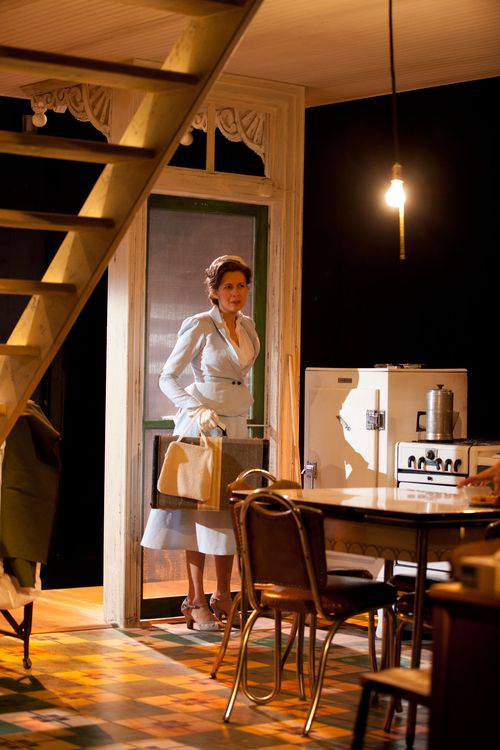
(Photo from WTF)


 The Useless Tree
Leave a reply to Jonathan Heeter Cancel reply