The blog has been quiet of late because I was on a bit of a holiday. My wife and I took our daughter and her cousin to the new Harry Potter theme park at Universal Studios in Florida. It was strange, exhilarating, hot, intriguing, repulsive…all at the same time. Not the way I would want to spend too much time, but worth a couple of days.
Over the course of our three days there I noticed the marketing strategies (rather hard not to since everything was for sale). The various and sundry rides and shows and simulacra are referred to as "attractions." They are designed to draw us in, to distract us, to capture our imagination, if only for short moments. They are meant to be attractive. Not all of them were. Indeed, the loud music and garish colors were, at times, off-putting – but maybe that is just me: a detached, sometimes aloof, academic. In any event, I found myself thinking that the more accurate term (though one less effective in terms of marketing) would be "diversions." The entire theme park industry – and indeed the overwhelming portion of cultural production more generally – is made to divert us, to shift our thoughts away from our failings, our short-comings, our mortality.It brought Pascal's Pensees to mind (which I haven't looked at since college). He has much to say about diversion, including:
143. Diversion. — Men are entrusted from infancy with the care of their honour, their property, their friends, and even with the
property and the honour of their friends. They are overwhelmed with business, with the study of languages, and with physical exercise; and they are made to understand that they cannot be happy unless their health, their honour, their fortune and that of their friends be in good condition, and that a single thing wanting will make them unhappy. Thus they are given cares and business which make them bustle about from break of day. It is, you will exclaim, a strange way to make them happy! What more could be done to make them miserable?- Indeed! what could be done? We should only have to relieve them from all these cares; for then they would see themselves: they would reflect on what they are, whence they came, whither they go, and thus we cannot employ and divert them too much. And this is why, after having given them so much business, we advise them, if they have some time for relaxation, to employ it in amusement, in play, and to
be always fully occupied.
How hollow and full of ribaldry is the heart of man!
For Pascal, work and social life are as much diversion as are amusements (like theme parks). For him, a mindful solitude that allows for reflection upon God is the antidote to diversions of all sorts. Even though Zhuangzi does not share his religiosity, I couldn't help but sense a certain similarity between the above passage and this one from Zhuangzi:
Once we happen into the form of
this body, we cannot forget it. And so
it is that we wait out the end.
Grappling and tangling with things, we rush headlong toward the end, and
there’s no stopping it. It’s sad, isn’t
it? We slave our lives away and never get anywhere, work ourselves ragged and
never find our way home. How could it be
anything but sorrow? People can talk
about never dying, but what good is that?
This form we have soon becomes others, and the mind vanishes with
it. How could it be called anything but
great sorrow? Life is total
confusion. Or is it that I’m the only
one who’s confused? (20)
Pascal's ribaldry is Zhuangzi's confusion….
Don't get me wrong. I had fun at the diversion park. There were a couple of wild roller coasters – Dragon Challenge and Incredible Hulk. These really do take you to a different physical place, even if only for a couple of minutes. If there were a Taoist reference here I would say they force you to be in the moment… And the Harry Potter Forbidden Journey ride was also fun. Not to be missed is the Simpson's Ride, which was a satire of amusement park rides, something like a meta-theme park….
But for all of the fun, I kept coming back to Pascal:
171. Misery. — The only thing which consoles us for our miseries is diversion, and yet this is the greatest of our miseries. For it is
this which principally hinders us from reflecting upon ourselves and
which makes us insensibly ruin ourselves. Without this we should be in
a state of weariness, and this weariness would spur us to seek a
more solid means of escaping from it. But diversion amuses us, and
leads us unconsciously to death.
He's probably right, but let me revise his sentiment just a bit, with all due respect to Emily Dickinson: too much diversion will certainly ruin us, but a little madness in the Spring, a ride or two on a crazy roller coaster, is wholesome even for the king…
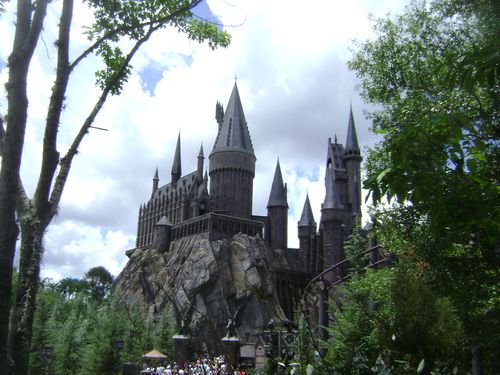
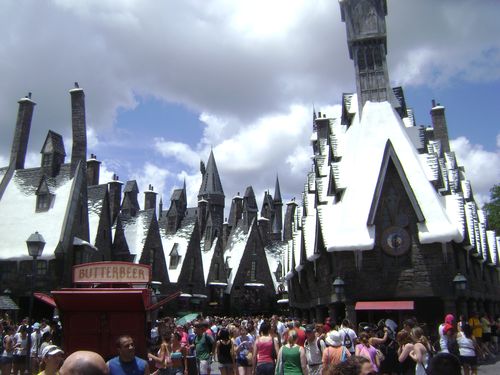
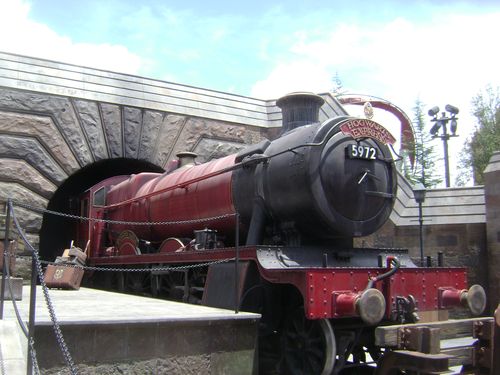
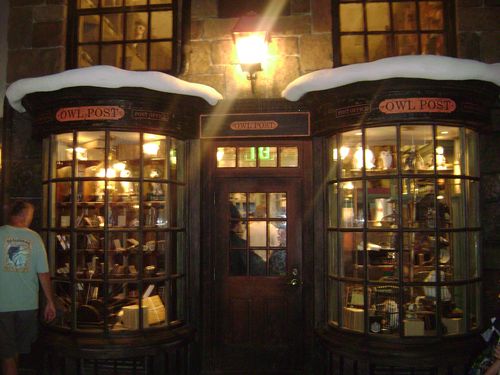
Some pictures:


 The Useless Tree
Leave a reply to The Rambling Taoist Cancel reply