Tomorrow I will give two talks here: one to the Shanghai Academy of Social Sciences and the other to the Foreign Correspondent's Club of Shanghai. In both cases, one point that I will raise is the notion that China is not now a Confucian society. I realize that this could cause a bit of a stir – there are many who will reject the idea – but, hey, I may as well shake things up, after coming half way around the world…
I focus on economic and social changes here and how they seem to render Confucianism, which I take to be a rigorous moral practice that generally eschews instrumentalist materialism, untenable. Jing Wang's book, Brand New China, which describes the rise of consumerist thinking and behavior here, has been helpful in this regard. She discusses "emulative spending," whereby the fashions and tastes of the rich shape the preferences and outlook of those further down the socio-economic scale. Veblen talked of the phenomenon as "emulative consumption" when he analyzed early twentieth century American capitalism:
The competitive requirements of
capitalism resulted in predatory and exploitationary tactics where
values of prowess supplanted older instincts of workmanship. In fact,
the concept of "emulative consumption" or the struggle to possess and
outdo your neighbor became an inseparable and undesirable effect of the
institution of private property.
Early twenty-first century China is not exactly the same as early twentieth century America, but I think something rather like emulative consumption is happening here. Especially right here in Shanghai.
This is one of the most vibrant and open and rich economic centers in the country (I haven't been to Guangzhou lately but it, too, is a commercial wonder). Wealth and high end commodities are very much in evidence. Shanghai People have a sophisticated, globally inflected, sense of style.
But what I noticed most today were the immense crowds of ordinary people from many other parts of China here on vacation. They come because Shanghai has long been the bright lights and big city that many want to see. And they are here in even greater numbers just now because The Bund, the famous riverside promenade, has been refurbished and reopened to the public yesterday.
So, today there I was on the Bund, amidst a sea of people from all over China. Some took pictures of me, because foreigners are one of the strange things you see in Shanghai. But as I wandered about I thought of them and Shanghai, and what Shanghai might mean to them. Does it symbolize some strange distortion of Chinese culture, a unrecognizable hybrid of East and West? Or does it stand for the new China and all that is possible, materially and culturally, through the new prosperity? My sense is that the latter impression is the stronger. Shanghai is long past its imperialist history. It is a Chinese city. It is an expression of Chinese culture. And, indeed, it could be the Chinese culture that many of these ordinary people from all around the country want to emulate. Perhaps not all the older people, but probably the younger ones. Shanghai is what China is now, and it is what China will be even more in the future.
In this way, Shanghai is rather like California (which is hard for a New Yorker like myself to say…): it sets the standard for what the rest of the country will be doing in the next decade. And if that is true, then the socio-economic trends that Jing Wang analyzes, especially the emulative and conspicuous consumption that drive this place, will make it harder and harder to assert that China is a Confucian society.
The Bund today (and more pictures below the jump):

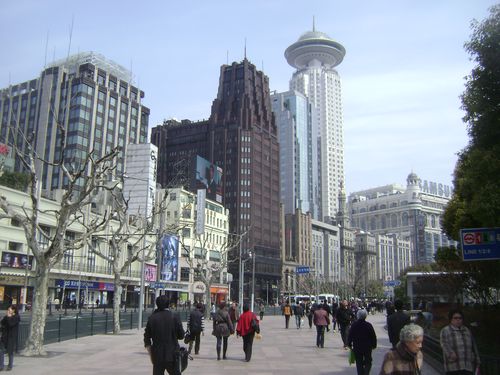
Maureen and I stayed in that art deco style hotel in the middle of the picture…twenty six years ago!
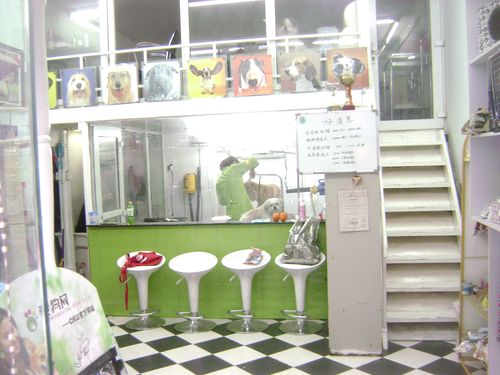
Dog grooming shop in the old French Concession…(for you Mo!)

The Peace Hotel from the new promenade on the Bund.

Nanjing Lu.
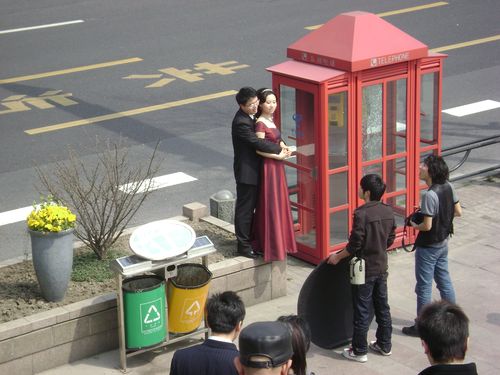
Not sure exactly what's going on…perhaps a photo shoot for an ad…
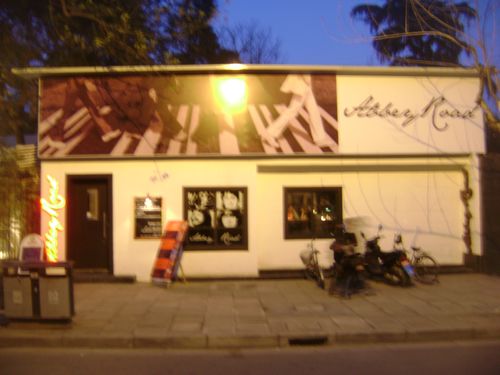
A little blurry but, yes, the Abbey Road bar (for Maggie!).


Leave a Reply