The holidays were busy for me (thus the fall off in blogging). Lots of people at our house; a trip to the city; various and sundry nights out. I saw a couple of movies, and will see a few more in the next several weeks. But the film that stands out for me at this point is Precious. It was riveting.
Much has been written about it already, including this long NYT Sunday Magazine piece. I am aware of the criticisms that have been brought: too melodramatic; too heavy-handed; too demeaning to African-Americans. But, for me, it stands as a powerful narrative of the the human possibilities of depravity and redemption. And, in that, I see a Confucian morality play.
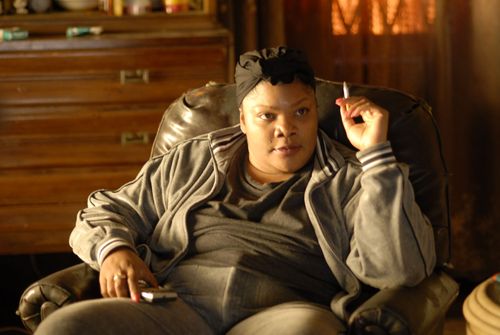
It should be said, right up front, that the most compelling performance is turned in by the actress Mo'Nique. She plays the mother of Precious, the teenage girl at the center of the story, and she does so with a fury and depth that are breathtaking. You want to hate the mother, who fails her daughter so fundamentally and so consistently. But, in the final scene, Mo'Nique lays bare all of her character's flaws and fears, and we almost begin to sympathize with her. And that raises a question: should we sympathize with her? Should we search for the humanity within the most horrible individuals we know? Is there some chance that there something inside this terrible, sadistic mother that might lead to her transformation? Maybe. Maybe not. The question, though, brings Mencius to my mind.
Mencius is, of course, famous for his belief that human nature is inherently good. He recognizes the existence of evil in the world, however, and he explains it as the outcome of cultivating the potential for badness that we all possess. Human nature, then, is not exclusively good but combines both good and evil. Here is an excerpt from passage 11.14 (6A.14):
each contain precious and worthless, great and small. Never injure the
great for the sake of the small, or the precious for the sake of the
worthless. Small people nurture what is small in them; great people nurture what is great in them.
Interesting the use of "precious" there…
In any event, the mother of Precious clearly cultivates what is small and worthless in herself. But Mencius suggests that she could, with dedicated effort, turn and cultivate what is great and precious. For him, humans are perfectible; self-improvement is always possible.
Perhaps Precious's mother is beyond redemption , perhaps she is too stubbornly wed to the small and worthless. Precious herself stands as the more straightforward example of recovery and liberation. But the last scene of the movie raises the possibility of the mother's change, however remote, even if only to the extent that recognizing and giving voice to one's failings could be the beginning of that change.
On the whole, the movie stands as a harrowing reminder of the basic Confucian principle of fulfilling family obligations. The hell presented on the screen is an expression of just how hurtful and debilitating it can be when people fail in their duties. The father of Precious, whom we hardly see, is the worst offender, both in his decadence and his absence. His unrestrained carnal impulses destructively radiate out from his immediate family to the world at large. He literally infects his daughter and corrupts his girlfriend. In the end, he pays a price but that hardly undoes the pain he has wrought. Perhaps if Precious's mother had stood up to him earlier the girl could have been spared the worst abuse. But mother and father alike ignored, to their peril, what Confucius described in Analects 5.25 as his "greatest ambition:"
“To
comfort the old, to trust my friends, and to cherish the young.”
Cherish the young, and we would not have or need stories like Precious…..


 The Useless Tree
Leave a reply to gmoke Cancel reply