OK, one more thing on the Jackie Chan thing…
There has been some debate about what, exactly, he was implying when he said: "我们中国人是需要管的." More specifically, the meaning of that last word – 管 guan – has prompted some debate, leading to alternative translations. Did he say something like "We Chinese people need to be controlled" or something like "We Chinese people need to be managed." For some, the first sounds rather more dire than the latter – though personally I don't see that much of a difference here.
But even if "manage" is the better translation of guan, what does "manage" imply in contemporary Chinese politics? Here is a usage that has rough and violent connotations: 城管, chengguan. Literally, it suggests "city managers," and could, to a Western ear, call forth the image of a small town technocrat, dutifully and efficiently doing the good public service in town hall. In China now it has a different meaning, more like "city enforcement squads," gangs of ruffiians who are called in to beat up and chase out street vendors or petitioners or farmers trying to resist corrupt officials from taking their land or, even, political protestors. Danwei considers translations possibilities here. Roland, too, picked up on the recent book instructing chengguan in how to use violence without leaving too many traces. And here are some other thoughts on the term.
ChinaSmack has a funny post on "city managers."
And perhaps the most famous image of 城管 is this:
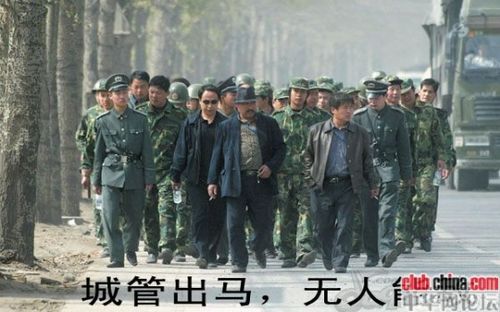
So, here's the question for Jackie Chan: is this the kind of "management" you were referring to? Do Chinese people need to be subjected to gang-style violence to keep them in line?


 The Useless Tree
Leave a reply to Peony Cancel reply