Sitting in Zhazha Cafe on Nanluoguxiang, working off the wireless here.  Let's see how long it lasts before it crashes….

Alan, over at Frog in a Well, called me out the other day, asking for a response to a blog post that invokes some Daoist imagery, water in particular, to describe conservatism.  Obsidian Wings does a funny repostAndrew Sullivan apparently like the original post.  

Now, I don't know much about how conservatives fight with each other to reclaim and refashion their ideology in the post-Bush era.  But Daoism I know (or, don't know, as the case may be).  And there is something rather amusing and wrong-headed when conservatives try to claim Daoism.

It's true that some Daoist sensibilities have some resonance with certain conservative ideas.  Less government: the Daodejing moves in that direction.  Just letting people do their things: to the extent that libertarianism is a part of the incoherent mish-mash that is contemporary conservatism, sure that's kind of like a Daoist orientation.  But here's the big problem for conservatives: Daoism is not, and cannot, operate as a political ideology.

The original post, comparing conservatism to water, by Stewart Lundy, wants us to believe that conservatism is not an ideology:

Conservatism is “formless” like water: it takes the shape of its
conditions, but always remains the same. This is why Russell Kirk calls
conservatism the “negation of ideology”….

I wonder what country he's been living in for the last eight years.  Perhaps this is what conservatives have to do now, to purge Bush from their midst: argue that it's no longer about ideology when, for two painful presidential terms it was about nothing but ideology.  But I digress.

The real question here for a conservative who invokes Daoism, as Lundy does, is: how far are you willing to go?  Yes, Daoism is about "being in the world."  And it does tell us to move through Way and life like water, taking on the form of the circumstances that surround us.  But for Daoism this means the impossibility of generating or applying any general principles to use as moral guidelines or means of assessment and judgment.  Is that a conservative idea?  To give up the creation and propagation of clear standards of right and wrong (which
Zhuangzi wards us off in order to avoid "mangling" ourselves and taking us away for our natural experience in Way)?

No.  After the facile first impression of "wow, Daoism kind of supports a free market," conservatives, when they come to realize the amoral implications of the Daodejing and Zhuangzi will run for the exits. 

There's another problem for Lundy as well.  He, like so many conservatives, wants to have God in the picture.  And that's fine.  But it's definitely not a Daoist thing.   At least not a philosophical Daoist thing (and religious Daoism is not monotheistic).  I suspect that this would make it rather difficult to get up at the CPAC convention and sing the praises of Zhuangzi and the Daodejing.

So Alan was right.  At the end of the day, it's just bad Daoism……


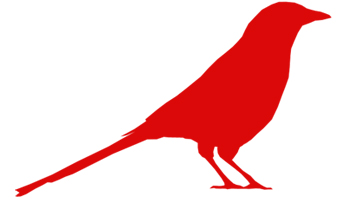
The Zha Zha connection turned out to work pretty well (it crashed once as I wrote this).  It's a very pleasant spot here.  And, apparently, "zha" means magpie, and their logo is a bird.  I'll leave you with it:

Zha

Sam Crane Avatar

Published by

Categories:

4 responses to “Daoism is not an ideology”

  1. Stewart Lundy Avatar

    Have you read Russell Kirk or Edmund Burke? The “redefinition” of conservatism was its original non-definition. At its heart is that it is indefinable and adapting. Purging Bush is not the problem, but evolving beyond decades of ideology. You are right, contemporary conservatism is nothing but ideology, as abhorrent as its liberal counterpart.
    Conservatism as a “negation of ideology” is not a new concept, though it was lost with the past century’s politics. “Conservatism” is a dead word. It was originally much closer to the adaptation and the interplay of opposites (in Burke’s own words, actually). For the record, I support incidentally political anti-ideology.
    The best criticism you offer is the use of “God” which is a placeholder for western minds. New vocabulary upsets people, so “Dao” is never used. God is only in the picture incidentally, though I’m glad someone finally noticed this. I was beginning to think no one saw what I was doing.
    At heart, conservatism is not political or moral ideology, but an adapting, evolving flow. I would go as far as to say that it is amoral. But I would have to say that amorality is also the source of morality.

    Like

  2. The Western Confucian Avatar

    “I wonder what country he’s been living in for the last eight years. Perhaps this is what conservatives have to do now, to purge Bush from their midst: argue that it’s no longer about ideology when, for two painful presidential terms it was about nothing but ideology.”
    I know for a fact that Stewart Lundy and the folks at “Front Porch Republic” would agree with you 100% about the “two painful presidential terms [that were] about nothing but ideology.”
    F.P.R. tells us that it was created to help restore “concepts such as human scale, the distribution of power, and our responsibility to the future” to “the public conversation.” It stands athwart “the political and economic centralization and atomization that have accompanied the century-long unholy marriage between consumer capitalism and the modern bureaucratic state” and against a “flattened culture and increasingly meaningless freedoms.” Its contributors are “convinced that scale, place, self-government, sustainability, limits, and variety are key terms with which any fruitful debate about our corporate future must contend.”
    That seems pretty Taoist to me, and not very conservative in the Bushevik sense of the word. But it doesn’t fit into the “two ideological veal crates” (to use Bill Kauffman’s term) that the contemporary American political lexicon offers, and is thus not easily understood.
    I think a little “rectification of names” is required here. The words “conservative” and “liberal” have lost any meaning they ever had. Stewart Lundy et. al. are what are called “paleoconservatives,” as opposed to Bush and his “neoconservatives” (a battle goes all the back to the 1930s*). The paleos were among Bush’s fiercest critics long before the War in Iraq even started. As Kirkians, they have no “paleoconservative ideology” to adhere to, but they tend to be non-interventionists (both in economy and foreign policy, unlike both neoliberals and neoconservatives) and radical decentralists.
    *The story is documented by Justin Raimondo, the openly gay editor of Antiwar.com who gave Pat Buchanan’s nomination speech in ’92 (when the candidate was running against Gulf War), in a 1993 book entitled “Reclaiming the American Right.”

    Like

  3. Taoist Voter Avatar
    Taoist Voter

    I agree with Western Confucian, it depends on how you understand “conservative”. You seem to be using the word in an extremely narrow, American context. In this context, I agree, Daoism has nothing to do with Neoconservatism. But Bush style neocons are hardly representative of all schools of political and cultural conservatism.
    Probably the most conservative aspect of Daoism I can think of is the narrative of gradual moral decline, which can be found in both the Dao De Jing and the Zhuangzi. Both texts speak of the “true men of old” and contrast them with the current situation today, where “the Way has been lost”.
    This strikes me as having a lot of resonance with conservatives, who by definition are concerned with “conserving” traditional values and ways of being. Liberals generally speaking have the opposite narrative, a narrative of progress.

    Like

  4. The Western Confucian Avatar

    Russell Kirk, whom Mr. Lundy quotes, said shortly before his death in 1994 that George H. W. Bush deserved to be hanged on the White House lawn for war crimes. What would he have thought, one wonders, of the son, whose crimes dwarf those of his father by many, many degrees?
    I’m not sure whether Kirk’s suggestion is Taoist, but it certainly is Confucian, and more specifically Mencian, suggesting as it does that the Emperor lost the Mandate of Heaven.

    Like

Leave a reply to Stewart Lundy Cancel reply