Thirty years ago today, on a wall at the intersection of Xidan Avenue and Chang'an Avenue in Beijing, an electrician from the Beijing Zoo, Wei Jingsheng, put up a big character poster (dazi bao) entitled, "The Fifth Modernization."  He would pay dearly for this act of political courage: long years in hard jails until finally gaining his release and exile.

The main point of Wei's argument was that if China was to successfully modernize, following the call of Deng Xiaoping (and before him Zhou Enlai) to enact the "Four Modernizations" (Agriculture, Industry, Technology, Defense), then a fifth modernization would be necessary: democracy.   He was quite straightforward:

We want to be masters of our own destiny. We need no gods or emperors.
We do not believe in the existence of any savior. We want to be masters
of the world and not instruments used by autocrats to carry out their
wild ambitions. We want a modern lifestyle and democracy for the
people. Freedom and happiness are our sole objectives in accomplishing
modernization. Without this fifth modernization all others are merely
another promise.

He came to his views not through study of Western thought or exposure to foreign thinkers.  During the Cultural Revolution he had been sent to Inner Mongolia and there encountered first hand the tyrannical abuse of power.  He demanded democracy from within his own life's experience.  

Jeffery Wasserstom today suggests that Wei might have been wrong in one regard:

Interestingly, Wei didn’t present democracy (the “fifth modernization”)
as an abstract good but as a pragmatic necessity. Without it, he wrote,
great obstacles would block China’s material development.

Obviously, China's material development has been very significant in the past thirty years.

But there is another way in which Wei was correct: modernization in China continually calls forth, of its own accord, the demand for democracy.  That is what the protesters in 1989 demanded; that is what the activists of the China Democratic Party demanded; that is what Hu Jia and the many other democratic dissidents continue to demand.

And in that sense, Wei is a Mencian.  Mencius was famous for standing up to people in positions of power and demanding that they listen to the people: Heaven hears through the ears of the people and Heaven sees through the eyes of the people.  Wei, too, stood up to power holders.  Mencius believed that the people must be respected and preserved, not trampled upon by corrupt and unscrupulous tyrants.  That is Wei's message, too.  Of course, Mencius did not call for democracy in the manner that Wei did, the concept and practice did not exist in ancient China.  But the idea of electoral competition and contestation for executive power as a means for maximizing political accountability of rulers to the people is certainly in the spirit of Mencian government.

Wei Jingsheng wan sui!
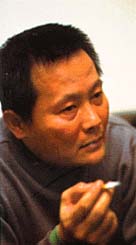
Weijg

Sam Crane Avatar

Published by

Categories: ,

4 responses to “Wei Jingsheng, Mencian Gentleman”

  1. isha Avatar
    isha

    Another used up “color revolution” puppet that out-lived his designated function. Is that why Wan Sui is used on him even though he is not physically dead yet?…

    Like

  2. isha Avatar
    isha

    Bush’s Baby: Wei Jingshen: Is Bush a Mencian Gentleman, too? Of course, Bush has always been a active advocate for democracy and human rights and he love “humans” so much he is wiling to take the trouble to bomb them back to the stone age. Wei love the Chinese so much and he wish them the same fate, too!… what a beautiful pair together!!! Mencian gentlemen indeed!!!

    Chinese activist warns of nuclear war
    Originally published 10:24 p.m., August 31, 2005, updated 12:00 a.m., September 1, 2005

    China is preparing for nuclear war with the United States over Taiwan, and a conflict is likely in the near future because of divisions among Beijing’s leaders, a Chinese democracy activist says.

    Chinese dissident warns Taiwan over goodwill to China
    ADMONITION: Wei Jingsheng, who spent 17 years in Chinese prisons for advocating democracy, criticized Taiwan officials for ‘abnormal’ zeal in wooing Beijing
    STAFF WRITER, WITH AGENCIES
    Tuesday, Feb 27, 2001, Page 3
    Former DPP chairman Shih Ming-teh, right, addresses a press conference regarding a nine-part dialogue on democracy and human rights he will jointly hold with Chinese activist Wei Jingsheng, seated. The conference is to begin on March 4.
    PHOTO: GEORGE TSORNG, TAIPEI TIMES
    One of China’s best-known exiled dissidents, Wei Jingsheng (魏京生), yesterday criticized Taiwanese officials for being too eager to woo their Chinese counterparts, adding that such an approach could be perceived as a sign of weakness in the eyes of Chinese leaders.
    “Some officials in the government have a rather abnormal attitude towards China. While China has remained unyielding, my Taiwanese friends in the government have handled China rather feebly, which will only make these Chinese officials look down on you,” Wei said.

    http://www.taipeitimes.com/News/local/archives/2001/02/27/75365/print

    Bush meets in White House with Chinese activists
    Jennifer Loven , Associated Press , Washington | Wed, 07/30/2008 9:09 AM | World
    WASHINGTON (AP) – President George W. Bush met Tuesday in his White House residence with prominent Chinese activists, a move designed to send a reassuring message to human rights groups upset that the president is going next week to Beijing to watch the Olympic Games.
    The White House identified the five as Harry Wu, Wei Jingsheng, Rebiya Kadeer, Sasha Gong and Bob Fu. Presidential spokeswoman Dana Perino said Bush held the talks to “discuss his concerns about human rights in China” and to promise that he would carry those concerns to Beijing. While in the Chinese capital, he is to meet with Chinese President Hu Jintao and other officials along with attending everal days of Olympics competition.

    http://www.thejakartapost.com/news/2008/07/30/bush-meets-white-house-with-chinese-activists.html

    Like

  3. Sam Crane Avatar

    Isha,
    Have you ever stood up and publicly criticized anything the Chinese government has done? Ever? You are safely ensconced in Houston, shielded by web anonymity. At least Wei had the courage to put his life on the line and speak out for what he, and many other Chinese people, believed in.

    Like

  4. isha Avatar
    isha

    “Many other Chinese people” apparently don’t believe in Wei Jingsheng. Actually, Wei is a laughing-stock for “many Chinese people”, because of his fooling around with such figures like Bush, Taiwan independenists and Japanese right-wingers and many other interesting figures.
    I happen to believe that the current Chinese government, with all its faults, is actually doing a pretty good job in industrializing China, comparing with many other countries and with other Chinese regimes in China’s recent history. Nothing is more important than industrialization for China to the average Chinese in my limited vision.
    As to web anonymity, apparently we don’t have that, nor do we?
    Isha

    Like

Leave a comment