Well, I finally made it to Qufu, the hometown and resting place of Confucius. As can be imagined, there are some major historical sites here, the big three (三孔) being: the Confucian Temple (initially built just after his death, in about 575 BCE, and rebuilt and expanded since then); the Confucius Mansion (a very large compound where the descendants of Confucius lived for centuries until the Communist Revolution); and the Confucius cemetery (where a "tomb" was raised, without actually holding his body, in honor of Confucius, and where thousands of his descendants are buried). All are World Heritage Sites. I also stopped by the Temple of Yan Hui, which commemorates the most virtuous of all of Confucius's early followers.
I found the cemetery the most interesting. It is quite large, surrounded by a wall that runs about 3.5 miles around. Overgrown with old and gnarled trees, it holds graves, some quite elaborate, of about 100,000 people, though only a fraction of them actually have headstones. Haunting is the word that comes to mind as you wander through the forest, chancing upon a finely carved stone from the Ming Dynasty and then a broken down marker from who knows when.
Some grisly things happened here, and at other locations in Qufu, during the Cultural Revolution, when Mao set the Red Guards out to smash all vestiges of traditional culture. Exhumation figures prominently. We'll leave it at that…
At the tomb of Confucius people paid their respects. Crowds of tourist groups (though very few foreigners) flocked in. Some put a little cash offering in a box; some brought artificial flowers; some knelt and bowed before the stone. Most just milled about, kids running about, oblivious to how seriously some of the adults were taking it.
The Confucian Temple was also thronged with Chinese tourists. It is modeled, but on a much smaller scale, on the Imperial Palace in Beijing, with a series of large couryards leading successively to the main building, which holds an altar to The Sage. Besides the smaller dimensions, another difference with the Imperial Palace, is the trees: the courtyards are filled with marvelous old pines.
Prominently situated throughout are impressive stele, large stone tablets with inscriptions written by various and sundry Emperors, mostly from the Ming and Qing dynasties (there were a few near the Confuicus tomb as well). I was struck by an irreverent thought as I looked at the imposing commemorations: some Emperors seemed to be saying, my stele is bigger than yours.
Here, too, a few people (a very small proportion of the very large crowd) burned joss sticks and bowed to the spirit of Confucius. More wrote out wishes on little red plaques and hung them up nearby, asking The Master for good luck in school, good health, a happy marriage.
The Confucian Mansion was less impressive by comparison to the other two sites. It certainly provides an insight into how comfortable life was for the elite in imperial China. Some really great rooms and spaces here. But less historical significance. There was one surprise, however. Tucked into a side courtyard, where I turned out to be the only visitor, was a fantastic collection of very old stele gathered from various locations around Qufu. There were a few going back to the Eastern Han dynasty; and at least one from the Western Han. Great stuff.
The Yan Hui tomb was both relaxing and disappointing. It is being renovated just now, so some of the more impressive gates were covered with scaffolding. Perhaps that was why I was virtually alone in the place. Not as large as the Confucius Temple, it is laid out in a somewhat similar manner: three tree-filled courtyards leading up to a large hall with a commemorative altar. I was saddened by the fact that so few people bother to go there (the main tourist packages do the "three Confucian" sites). In The Analects, Yan Hui is the symbol of anti-materialist humanity at its best, but no one was stopping to pay respect to him and what he stood for. A sad commentary….
Photos below
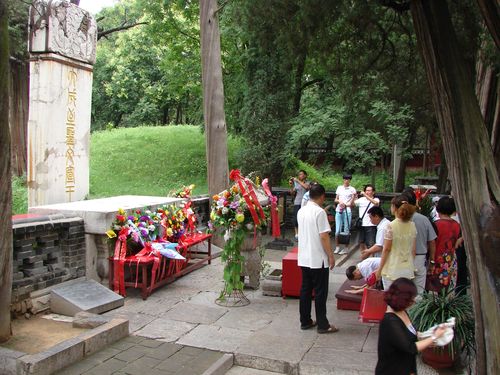
Bowing before the Confucius Tomb
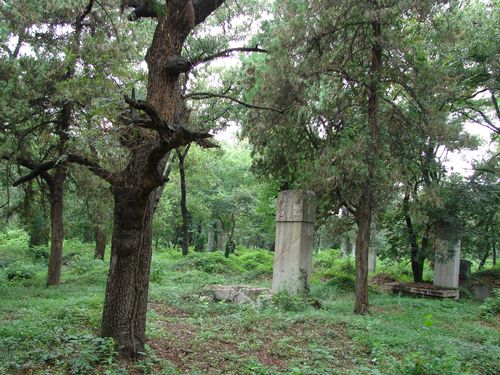
A forest of graves
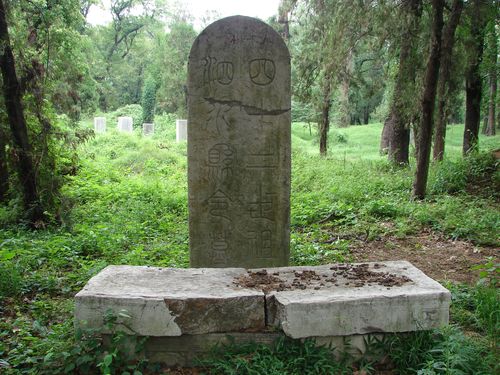
A 42nd generation descendant of Confucius. The cracks could be Cultural Revolution era damage.
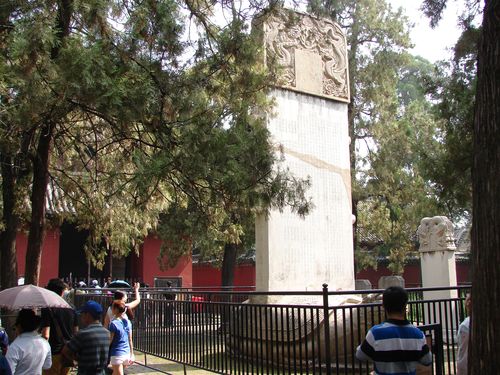
At the Confucian Temple: an Imperial stele
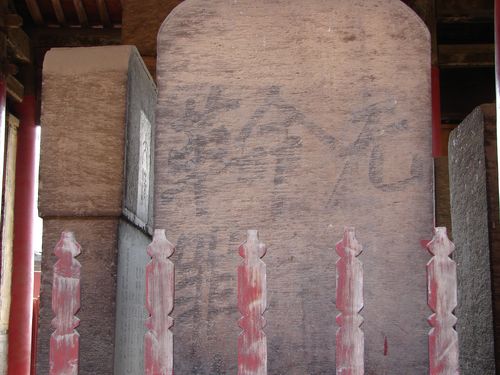
Cultural Revolution damage at Confucius Temple. This stele still bears the painted messages: "Revolution is no crime."
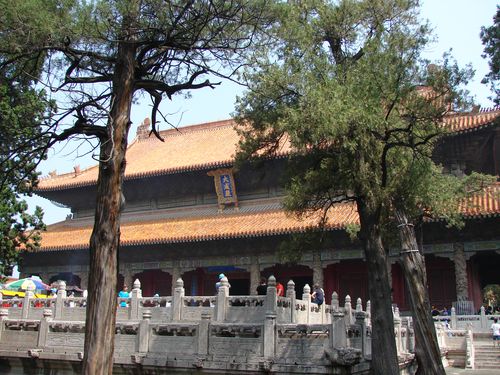
Dacheng Hall, the center of the Temple of Confucius, Notice the yellow roof tiles: usually reserved for the Imperial Palace.
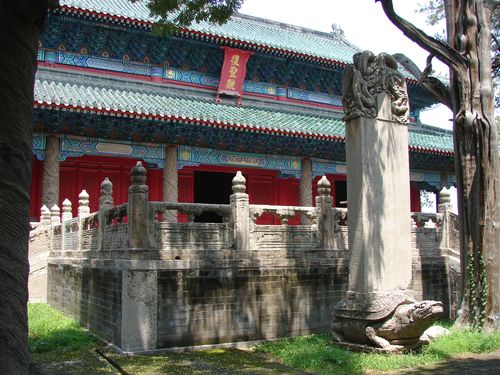
Yan Hui Temple: some impressive stele here, too.
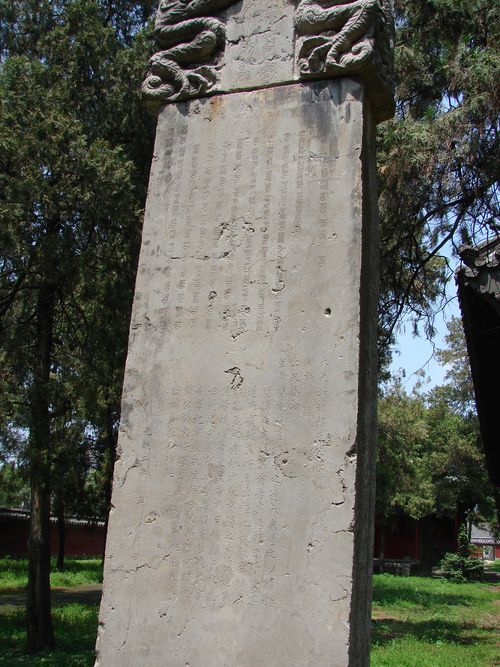
Yuan Dynasty (1271-1368) stele at Yan Hui Temple: the script at the top is Monglian.

 The Useless Tree
Leave a comment