As my semester winds down, and grading final papers and exams presses in on me, I find my attention turning (don't worry, I'll get back to the grading shortly) to more pleasant summer pursuits. For me, this year, those include attending a conference in Beijing, or, to be more precise: "The International Conference on Comparing China and the West: Bringing the Disciplines Together," to be held at Peking University (they still use the old school Wade-Giles transliteration) in July. I'm not quite sure who all will be there or what the line-up of papers and presentations will be (the conference web site has not yet posted a program), but it should be interesting.
What attracts me about this conference is the opportunity to write and present something on certain issues that have emerged in the wake of my most recent book (which is grinding along toward publication, likely in October). That volume works through a number of cases of how concepts drawn from pre-Qin Confucianism and Daoism might be applied to contemporary social and ethical issues in America. Now that it is done and nearly out, I have begun to think more broadly about how such intercultural conceptual transpositions work. What can Confucianism be in the contemporary US? It cannot be what it was in pre-Qin China, and it cannot be exactly what it is in contemporary China, but can it be something still recognizable as "Confucianism" in America now? I have, up until this point, simply assumed that the answer to this question was "yes, there can be a contemporary American Confucianism." But what does that entail?
I have been willing to assume the possibility of an American Confucianism because, as I hope my book illustrates, I can see how ideas drawn from early Confucian texts can be systematically applied to ethical debates here and now. They are not wholly alien to contemporary American concerns. With a little bit of interpretive work, they yield reasonable and understandable contributions. In a more general sense, as I read and re-read and re-re-read these texts, I am constantly noticing how ideas from them speak to me in an immediate sense. These books do have meaning in our own time; we can find meaning in them; we can make meaning from them.
And, of course, there has been a great deal of intellectual work done in recent decades that clarify how Chinese and American thinking can intersect and synthesize. I'm now reading Gish Jen's new book, Tiger Writing, and I am beginning to believe in the virtual inevitability of the hybridity of the independent and interdependent selves. We are all now, always, both (I will elaborate that idea later in another post…)
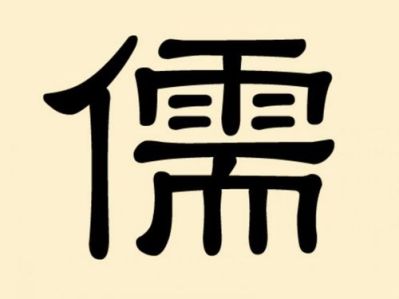
While all of this seems plain to me, however, what I also notice is the absence of explicit reference to Confucianism outside of a rather small circle of comparative philosophers and historians and writers. In a time when it is more possible than ever to bring Confucianism into American thinking, it just does not seem to be happening. Or, it is happening only excrutiatingly slowly. Confucianism, as my title today suggests, does not seem to be catching on in the US.
I have some ideas for why this is so, and what might have to be done to change things, but I am still working them over (i.e. haven't written the conference paper yet!). Today, I just want to point out a rather blatant example of what I mean when I say Confucianism is not catching on.
Last week, The New Yorker ran a piece, "The Baby in the Well," by psychologist Paul Bloom. It is a relfection on the notion of empathy, working through certain conventional understandings of its importance to ethical life and laying out, contrarily, the case against it. It is a typically smart New Yorker piece, with the cheekiness to question something that we would assume everyone is for: empathy.
For me, the totally baffling thing about the article is its failure to cite an obvious reference for this subject matter: Mencius. To those familiar with that great Confucian thinker (like my friends over at Warp, Weft and Way), the title of Bloom's piece seemed to be invoking one of the most famous images in Mencius:
Here is why I say that all human beings have a mind that commiserates with others. Now, if anyone were suddenly to see a child about to fall into a well, his mind would be filled with alarm, distress, pity, and compassion. That he would react accordingly is not because he would hope to use the opportunity to ingratiate himself with the child's parents, nor because he would seek commendation from neighbors and friends, nor because he would hate the adverse reputation [that would come from not reacting accordingly]. Bloom, 2A6
"Reacting accordingly," for Mencius, is moving to prevent harm to the child, which is impelled by a deep human capacity for commiseration and empathy.
This is a perfect trope for Bloom's purposes, but, alas, it is nowhere mentioned. The "baby in the well" of the title refers to a couple of cases in American history of children actually falling into wells and attracting national attention, which Bloom ultimately believes is misplaced. But if he wants to make a case against these sorts of emphatic reactions, wouldn't it be great to invoke the most famous "bady in the well" reference in all of Chinese experience?
But, no. When "baby in the well" is brought to mind in American discourse, very few people, relatively speaking, make what for some of us is the blaring obvious connection to Mencius. And that is because Confucianism, more generally, has not caught on in the US.
Perhaps I could blame, in some way, Bloom for this failure. If he is seriously thinking about empathy, and employing the "baby in the well" image, he should, as a highly accomplished academic psychologist, know that the apt Mencius reference is there for the taking. But that would be unfair. His training and professional experience largely ignore ancient Chinese sources, which are simply out of sight and out of mind. In another, longer piece, "The Moral Life of Babies," from the New York Times Sunday Magazine, he makes one reference to Confucius, as a source of the "golden rule," but, again, no consideration of the Mencian assertion that we are born with an innate capacity to do good. Similarly, one of the books he mentions in the "Baby in the Well" article, The Emphatic Civilization by Jeremy Rifkin, makes only glancing reference to Confucius, again in relation to the global presence of "golden rule" ethics.
Thus, a vast tradition, which strikes me as so clearly relevant to contemporary questions, is largely an afterthought for many intellectuals working on issues central to that tradition.
The problem, it seems to me, is not simply a matter of the ancientness of ancient Chinese thought. Ancient Greek and Roman and Christian and Jewish thought are regularly invoked in American intellectual life. We are raised on those sources and we, many of us, believe that those traditions continue to be immediately relevant to our contemporary lives. In these cases, old can be good.
But ancient Chinese thought is an eon and an ocean away. It just seems so remote, at the outset, that many Americans may just not want to try to look there for meaning.
There are also political obstacles to the wider diffusion of Chinese thought in the US. The public embrace of Confucianism by the current PRC government, connects in the minds of some, the ancient philosophy with contemporary political practices that are seen as odious. Why would you want to embrace ancient Chinese thought if it is a pillar of current Chinese authoritarianism. To be clear: I do not believe that Confucianism necessarily produces authoritarianism; indeed, if may function best, as a moral theory, in a democratic political context. But I think the perception is there for some, maybe many, Americans: Confucianism has been historically, and continues to be today, an ideological tool used to bolster centralized state power.
Thus, part of the solution is to make clear that Confucianism can be consonant with liberalism, which I take to be fundamental to American cultural, as well as political, understanding. And I believe such accommodation is possible.
But it is more than politics. For those of us who see the ways in which ancient Chinese thought can speak to modern American life, our work is cut out for us: we just have to make the case, day in and day out, in the widest possible array of illustrations, that Confucianism and Daoism and other philosophical perspectives do indeed have something to say today us today. Maybe in this case familiarity will breed appreciation.


 The Useless Tree
Leave a comment