There is a bit of a dust up over Confucius Institutes, those Chinese-government sponsored organizations that promote Chinese language teaching in US (and locations all over the world). But before we get to the details of this kerfuffle, a word about Confucius Institutes.
They are not about Confucius. Rather, the PRC government has chosen to use the name of Confucius as a trademark of sorts for a global soft power branding project. The Institutes, most of which in the US are hosted by colleges or universities, focus on language learning, with a variety of other cultural activities: Lunar New Year parties: calligraphy; a little Peking Opera; etc. As far as I can tell – and I have been in conversation with many US academics who have CIs on their campuses (my college does not have one) – there is no systematic effort to engage with Confucian thought in any serious manner.
Indeed, I find no direct reference to Confucius the man and thinker on their English language web page; though there is a little video on Hai Rui, an upright bureaucrat from the Ming Dynasty (no mention is made of the fact that his story was central to the initiation of the Cultural Revolution in 1966). The Confucian-killer Qin Shihuangdi seems to get more attention there than Confucius himself. Bottom line: CIs are not the place to go if you want to learn about Confucianism.
And there are ironies here. The Chinese Communist Party, born of the anti-Confucian radicalism of the May 4th period and vehemently anti-Confucian up through the 1970s, is now reaching for The Master as a happy, avuncular image to adorn a most un-Confucian authoritarian-capitalist modernity. Kam Louie, in a great piece, "Confucius the Chameleon: Dubious envoy for Brand China (pdf!), gets at some of the problems here:
There is an implicit belief among most people that because Confucianism has long dominated Chinese culture and because Confucius is a Chinese name, we should adopt it to represent China. But that’s like proposing changing the Voice of America to the Voice of Jesus. Most Americans may identify themselves as Christians, but America is much more interesting and diverse than one dominant religion or one individual. In the same way, an institute that purports to promote Chinese culture should not do so in the name of one person, especially if that name or person has generated bitter controversies in the recent past.
And you know there are Christian conservative in the US who would be very happy to change the name of the VOA to the "Voice of Jesus." Louie continues:
…the confusion surrounding the debates on how to salvage tradition in a new China have been compounded by incoherent interpretations of Confucius’s teachings in recent years. All the indicators suggest that domestically, the advocacy of Confucianism will in practice lead to the promotion of very conservative and inconsistent values. Internationally, if such values are to be paraded as the best of “Chinese” essences, China’s contribution to world culture will be a confused and regressive one.
He may be right: there is a conservative bias in Confucianism that will limit its applicability in an open, dynamic, globalized postmodern context. And he is certainly right in suggesting that the explicit purpose of the current CCP-sponsored Confucian revival in the PRC is designed for conservative political purposes: to maintain the legitimacy and power of one-party authoritarianism. But, for all of that, I still think there is something interesting and valuable in applying Confucian ideas to contemporary questions.
In any event, to get back to the recent controversy…
About a week ago the US government issued a policy directive indicating that the visas for some Chinese nationals working at Confucius Institutes in the US might be invalid. The directive is specific and narrowly drawn: the issue involves Chinese nationals whose visa is sponsored by a college and university who then go on to teach in elementary or high schools. It is not an assault on CIs generally. Rather, it is an action to implement existing visa limitations that attached to foreign nationals at college and universities. The State Department has since clarified its stance:
Regulations related to J-1 visas, which are given to people participating in work- and study-based exchange programs, make it clear that foreign professors, academics, and students at the university level are prohibited from teaching in public or private schools at the precollege level, the State Department official said. Those visa holders will have to leave the United States by the end of June and must reapply for the correct visa to return to this country.
It would seem, then, that some sort of other arrangement needs to be made for the elementary and high school teaching functions of CIs. The underlying problem is that CIs have tended to be embedded in colleges and universities (unlike other organizations like Germany's Goethe Institutes or France's Alliance Française, which are not connected to higher education institutions). At most, a rather minor inconvenience that will likely be tidied up in short order.
You wouldn't know that from this op-ed in the Global Times english edition: "Why is Washington so Scared of Confucius?":
The issue shows that the US' cultural confidence is not as strong as we thought. The promotion of Chinese language and culture by Confucius Institutes makes some Americans uneasy. Only culturally weak countries have such sensitivity.
That seems like a bit of a jump from a rather technical consular issue to a sweeping condemnation of US cultural weakness. The US is not afraid of Confucius; rather, the US generally doesn't care very much about Confucius.
There is, however, a long-standing critique of CIs in the US, but is not so much a matter of cultural anxiety as it is a political question. CIs are CCP-sponsored institutions and their mission is to support the soft power of the PRC. The money that flows from the PRC to finance CIs has certain strings attached to it. You will not find an open debate about current political issues in Tibet or Xinjiang being sponsored by CIs. We all know that. The worry is that the political agenda expands further to limit academic freedom. US colleges and universities are very defensive about academic freedom. We don't like political limitations on academic inquiry. And CIs naturally raise those questions. We should ask those questions and work to ensure that CIs do not violate academic freedom. That's how we roll. And our approach has been very successful in academic and intellectual terms, as tens of thousands of PRC students (including the daughter of President-to-be, Xi Jinping), who travel to the US for college and graduate school, know well.
The People's Daily apparently got a bit stroppy over this:
“This absurd measure reflects illogical thinking and an immature mentality,” said an editorial by state-run People’s Daily. “Finding scapegoats, witch hunting and shifting focuses are not the right ways to do things.”
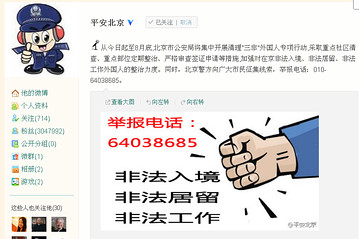
Ironies abound here. At present the PRC is carrying out a policy to crack down on illegal foreigners in China, people whose visas are expired or inappropriate. Heated rhetoric about "throwing out the foreign trash" has been circulated by prominent media figures. Foreigners in China are under general suspicion. So, it seems an odd time for the People's Daily to be complainig about "finding scapegoats" and "witch hunting."
Perhaps we should all just chill out and listen to Confucius, Analects 5.12:
Zi Gong said, "What I do not wish men to do to me, I also wish not to do to men." The Master said, "Ci, you have not attained to that."
子貢曰:「我不欲人之加諸我也,吾亦欲無加諸人。」子曰:「賜也,非爾所及也。」


 The Useless Tree
Leave a comment