In a post last week, James Fallows raises an interesting question: "What is the Chinese Dream?" He is, of course, alluding to the notion of the "American Dream," and wondering whether contemporary China has a similar summarizing cultural symbol that captures the aspirations of the society as a whole.
It should be noted at the outset that any such endeavor is flawed in the sense that a "dream" of this sort is never fully inclusive of an entire society. The "American Dream," obviously, often fails. But Fallows's exercise is still worthwhile, if we are seeking a comparison of contemporary China and the US, at least along the "soft power" lines of symbolic imagery.
One point he raises, that I want to push back on, is the "non-universal" quality of Chinese ambitions. He writes:
…After China's centuries of seeming to move backward as a society and its more recent decades of tragedy and turmoil, the simple bourgeois comforts are much of what the modern Chinese miracle could and should provide.
But there is a way in which the question does make sense, as an expression of concern about what the rise of a "non-universal" nation will mean for the rest of the world.
He contrasts this immediate, particularist, material Chinese focus with the universal projects of the West:
Through the centuries of Western military, technological, and economic dominance, "universalism" of some sort has been so basic a part of international relations that it barely needed to be discussed. The leaders of the French Revolution issued their Declaration of the Rights of Man — not the rights of Frenchmen. The Declaration of Independence began, "When, in the course of human events," not "events in the colonies of North America." With varying degrees of sincerity, Western colonialists tried to create replica British, French, or American citizens in their colonies. Long before the colonial era, Christian missionaries wanted to bring people worldwide to their view of the one true universal faith.
We must first recognize that imperialism and colonialism and coercion were the means by which various universal ideals were imposed upon others around the world. And we must also recognize the terribly human cost of those impositions.
But Fallows's point, I think, is that, after WWII, certain ideas – popular sovereignty, human rights, bourgeois materialism – did become widely dispersed and absorbed into the indigenous practices of many, many countries around the world, China included. And to the degree that those "universal" ideals create hopes and aspirations in individuals in many different parts of the world, they could provide a kind of soft power resource for those places that are perceived to be permitting their expression to the greatest degree. The "American Dream" can be understood as being consistent with certain globally-dispersed aspirations (thus the large number of people from other countries who seek citizenship in the US to pursue those aspirations). Can the "Chinese Dream" be similarly conceived?
Maybe it can. And that might be possible because China is becoming "universal," at least in a certain sense.
Nine years ago I gave a lecture on this very topic, entitled, "The Return to a Universal China," later condensed into an LA Times piece: "Pop Culture Leads — Freedom Follows" There, I argued that in imperial China there was a sort of universalism:
In imperial times, a universal ideal of Chinese-ness was to be found in the Confucian classics. Anyone, regardless of ethnicity, could learn to live the good life. Qian Long was Manchurian, not Han Chinese, yet he was, in his time, the epitome of Chinese culture. Indeed, the primary means to political power and wealth was cultural attainment, tested by the rigorous bureaucratic examination system. Independent merchants may have made fortunes through their entrepreneurial wiles, but, once successful, they quickly took on the trappings of the Confucian gentleman and made sure their sons studied the classics and practiced the rituals.
The universal civilizational ideal disciplined both politics and economics. This, of course, was lost in the 20th century, with the decline of the Chinese imperial state and the rise of Maoist socialism. The rest of the story is well known:
In communist China, the party monopolized political power and the state controlled how wealth was produced and distributed. The party-state was also in the business of regulating culture. Mao even launched a Cultural Revolution in a desperate effort to destroy any possible challenge to his own preeminence. The Confucian gentleman was dead and the Red loyalist supreme.
China's universalist aspiration was also killed. It seemed, for a fleeting moment, that traditional Sino- centrism might be replaced by socialist internationalism, that China would be a part of a grand global revolutionary project. But nationalism proved the stronger force. Mao was, in the end, much more interested in socialism in one country — his own — than in building a worldwide movement.
By putting "politics in command," Mao rendered a universal China impossible.
Deng Xiaoping's "opening and reform," however, re-calibrated the balance between culture (which was traditionally the realm of Chinese universalism), politics and economics. The Party would hold on to political power but would permit much greater latitude for individuals pursuing self-interest in the economic and cultural spheres. And that has opened the way for new universalist possibilities:
The political liberation of culture and wealth is not unprecedented in Chinese history. In the early decades of the 20th century, the old ways had been discarded and the new was everywhere intoxicating the young. But war destroyed this efflorescence, and communist victory brought back a stricter political regime. Now, however, the openness is even headier. Globalized communications and transportation make virtually any cultural form anywhere available to the Chinese. And they seize the opportunities with passion.
Oddly enough, globalization has also reconstituted a Chinese universalism of sorts. Imperial universalism was founded on the notion that (almost) anyone could become Chinese; now, universalism is a matter of Chinese becoming (almost) anything.
That last paragraph holds up pretty well nine years later.
The issue, however, is that the contemporary cultural transformation of China, the destabilizing openness to a much wider range of expressions of "Chinese-ness," is very much still in process. The Party tries to contain cultural change at the margins, when it threatens to undermine its political hegemony. Many Chinese people, especially older generations, are uncomfortable with the loss of traditional (even if that means "socialist") foundations for meaning and ethics. Problems and tensions abound. But many Chinese embrace the new possibilities. They move forward creatively and happily and ingeniously, re-inventing Chinese-ness and China at every step.
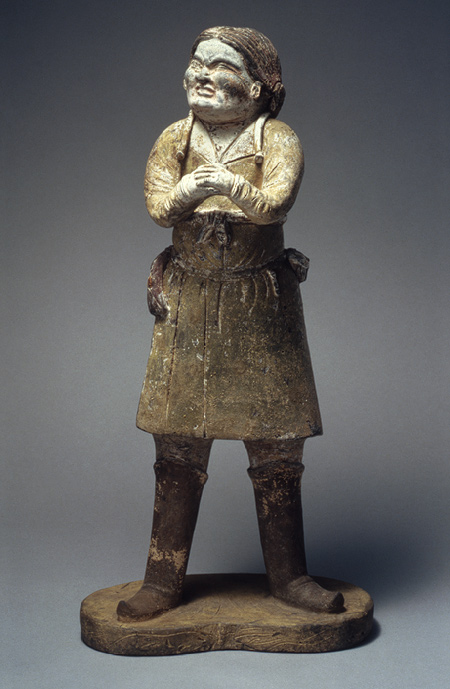
There have been other moments in Chinese history when cultural change and openness shaped identity in new and beautiful ways: the Tang Dynasty. Perhaps that could be a model for a new "Chinese Dream". Kaiser Kuo, who named his metal band "Tang Dynasty," suggested as much a few years ago:


55 responses to “Reply to James Fallows: The Return to a Universal China”
Basic history lesson for skc
http://en.wikipedia.org/wiki/British_Hong_Kong
“British Hong Kong refers to Hong Kong as a Crown colony and later, a British dependent territory under British administration from 1841 to 1997.”
Who does this fraud think he’s fooling?
LikeLike
Of course, skc will only come back and say that Hong Kong wasn’t the real “Hong Kong,” the “real Hong Kong” lives in his imagination much as his experience with Hong Kong people I must now assume. If his statements so far are any indication of the accuracy of his anecdotes of opinionatedness Hong Kongers, we must conclude that they ought to be dismissed as the rantings of a lunatic. So even on that anecdotal basis, there’s no reason to believe what he initially claimed.
LikeLike
Well, I see you have yet again failed to answer some basic questions. And each time you avoid questions and obfuscate as you tend to do is more telling of the dearth of your character than the last. But if that’s the trajectory you prefer, that’s fine by me.
Now, I wonder where in the hierarchy of evidence “common sense” falls. Common sense, when used appropriately, is very powerful stuff. Don’t run with scissors. No open flames in enclosed spaces. The list goes on. However, invoking “common sense” as the only means of supporting an argument is pathetically weak stuff. It’s the final option when all you have is your opinion, but can’t ball up to admit it. If that is what you need to resort to…well, you do what you gotta do.
Yes, some might even think that residents of HK are somehow different than PRC Chinese. But this discussion is not about whether they are different. It is, to remind you yet again, about whether “it is contrary to Chinese culture to offer unsolicited opinions” or not. In all your huffing and puffing about British colonial effects, all you’ve come up with is some bastardization of the Stockholm syndrome, and said bastardization is entirely unsubstantiated. So no, this isn’t about common sense; it’s about whether you can show that “British influence artificially lowered the innate Chinese cultural impetus to offer unsolicited opinions among HK Chinese, such that my experience with HK Chinese in this regard underestimates said impetus in “real” Chinese who were free of British influence”. Unless and until you can answer that, you are nowhere. And since you’ve had ample time and multiple requests to offer up something of substance, yet failed to do so, I doubt you’ll be getting anywhere anytime soon. And of course, you won’t acknowledge that, probably due to your…ummm….limitations.
“The irony here is that this sentence is self contradictory…It is itself a claim.”
—wow, have we really sunken down to this? In that case, every statement is a claim. Your behaviour is pathetic. Yeah, that’s a claim. Not to do with the topic of discussion, but a claim nonetheless. Anyhow, I’ll leave you to your juvenile antics. But assuming that you are chronologically of the age of majority, your maturity level significantly lags behind your stated age. Your debating style is devolving into a certain sub-type I’ve come across before.
It’s more and more funny now, what you said on June 10 0842PM (“Because you can only carp on these petty issues”) in response to my HK comment. Since that time, 6 of your 9 subsequent comments have been related in whole (or in large part) to something that I mentioned with 34 words in 2 sentences. So I wonder who is truly missing the forest for the trees? Just like with your bastardization of Stockholm syndrome. You fixate on “kidnap” vs “hostage”, yet fail to address how it relates to the actual topic of discussion. This sort of derailing behaviour is what usually identifies trolls. Is that your career aspiration here? If so, you’re earning your stripes rapidly.
Anyway, you mentioned that I am repeating myself, and you can thank yourself for much of that. If you want to move the discussion forward, you can address the questions posed (a repeat, I know) here or from June 10 1116PM or June 11 1155PM. If you want to troll, you can continue in the same vein as your last 3 comments, which can only be described in the most charitable way as the opposite of useful.
LikeLike
I’ve answered the relevant “questions” definitively and the rest are simply irrelevant.
You have yet still answer how long is the history of British colonialism in Hong Kong?
Are Hong Kongers a representative sample of Chinese people and culture?
Is mainlanders a more representative sample.
What is the stockholm syndrome?
Who committed the burden of proof fallacy when he criticized someone for lack of proof?
Your failure to answer these questions correctly is a tacit admission that you have been exposed a a fraud, a bullshit artist. The more you draw this out the more obvious it is that you are a petty and spiteful bullshit artist to boot.
LikeLike
That’s all… this has descended to name calling and I really don’t want to be distracted any further. Comments are off….
LikeLike