Here's a story from the Time of India (hat tip CDT):
its political content. Some sections of the Chinese media are using the movie to
indirectly complain that Chinese film makers do not have enough freedom to
depict social and economic
realities.
"The fate of this
movie in India displays a sharp contrast with some Chinese films," an article in
China Youth Daily said. It mentioned Chinese film maker, Jia Zhangke, who won
international acclaim for his film, Still Life. But Jia was was blamed for
"trading the sufferings and sorrows of his motherland for the good impression of
Westerners".
….
Yang Yuanying, vice
director of Film Studies at Beijing Film Academy, compared it with previous
Oscar-winnings like Crash and Babel that had strong political and social
content.
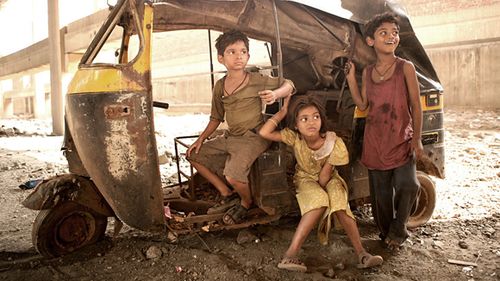
"Slumdog Millionaire
still included such political elements as race and class," Yang was quoted in
the official media as
saying.
"Oscar-winner Slumdog
Millionaire has resonated with audiences for having the guts to reveal social
realities in India – police using torture to coerce a statement, the deaths of
civilians out of religious conflicts, and child abductions and abuses," the
China Youth Daily said. It praised the Indian government has also been praised
for allowing its screening in the face of criticism from people who believed
that the movie blemished the image of
India.
Reminds me of the brouhaha that erupted over Kung Fu Panda
Political restrictions on cultural expression ultimately limit a country's global profile. If PRC leaders really want China to be a "Great Power" they need to think of that not only in military and economic terms, but in cultural terms as well. Great Powers are producers and exporters of culture. It's a "soft power" thing. The heretofore clumsy and limited experience of the PRC's Confucius Institutes is just not going to get the job done. And the political nervousness and nationalist uptightness over cultural products that ruffle conservative feathers simply restricts the creative capacities of Chinese artists and the global reach of Chinese ideas and images.
To gain power and influence in the global cultural marketplace (and, I believe, in global economic practice more generally), you have to give up control…
….which actually sounds like a Daoist idea…..


 The Useless Tree
Leave a comment